














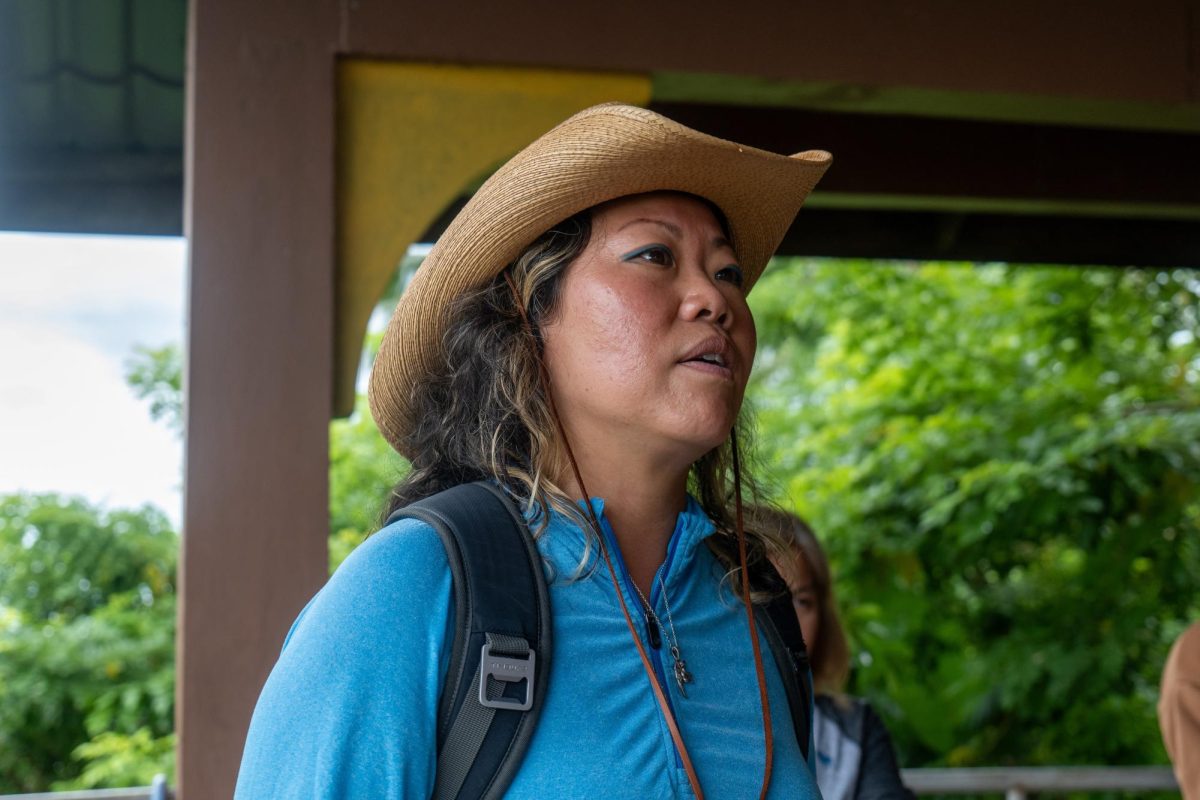
“Eww!” English teacher Pearl Bauer yelped as her students slurped up their first tastes of balut, a fertilized duck egg and Filipino street food.
She recalled, as a young girl, stopping at a stall for balut with her family on the four-hour drive from their home in Manila to their cabin in Baguio, a mountain on the Philippines’ Luzon island where it “smells like twilight.”
“My mom would force us all to eat balut,” she said. “I would see the furry stuff and the toenails. I couldn’t stomach seeing the little chicks. And so I would [eat] it in the dark.”
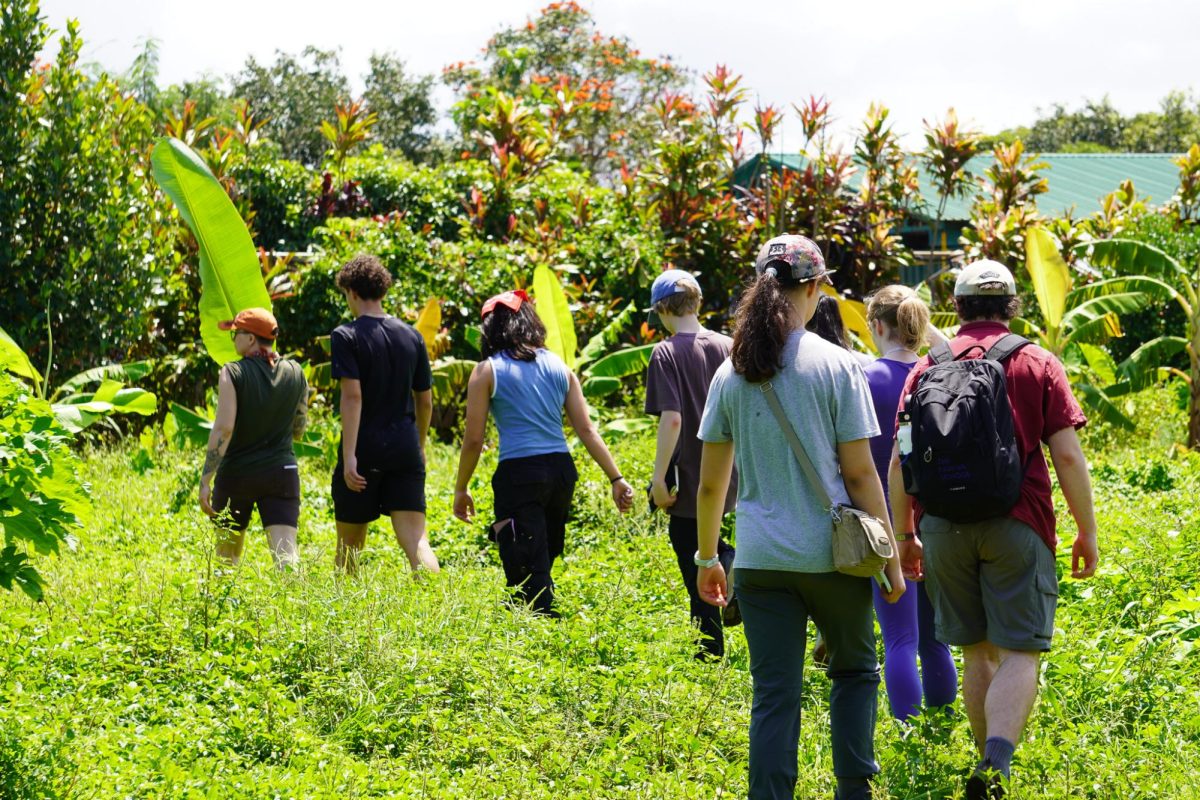
This summer, Bauer traveled to the Philippines for the first time in 29 years with a group of 18 Upper School students. The 14-day trip was a community service learning (CSL) trip Bauer co-developed and led with Director of Environmental Citizenship Sarah Koning.
The group visited four cities in the Philippines—Tagatay, Batangas, Puerto Galera, and Manila—over the course of two weeks. They experienced traditional and modern Filipino culture, learned about the history and lasting impacts of colonialism, engaged in environmental service projects, and savored rich cuisine. The group also met with three Indigenous Filipino communities to continue a partnership with a local nonprofit, Kabisig ng Kalahi, established by trip member and Filipino Affinity Group co-lead Ava Cabreza ’25. The group also volunteered and spent a week learning at the Stairway Foundation, a therapy and education program for former Manila “street children.” In addition to leading the students and coordinating trip logistics, Bauer played a key role on the trip by translating the local Tagalog language to her English-speaking students.
For Bauer, this trip wasn’t just for work—it was a long overdue return to her homeland.
Before immigrating to New Jersey at 9, Bauer lived in Manila with her parents and three siblings.
Her father, who Bauer calls her “first hero,” also grew up in the city as a “street kid.” After his own father passed away when he was 6, Bauer’s father fell into a life of selling goods on the streets to support his family and became involved with dangerous gangs.
That all changed when, at an umbrella manufacturing company, the business owner mentored her father in his entry-level position as a janitor.
There, he gained a more stable income and, as a voracious learner, became a mentee of the company head and quickly worked his way up the ranks. He eventually left the company and began several extremely successful and profitable enterprises, including his own umbrella company.
While Bauer was a young girl, political unrest in the Philippines culminated in the People Power Revolution. Little conflict ended up occuring, but their family had already moved to the United States to avoid any possibility of instability.
They moved to New Jersey—where it rains often and Bauer’s father could market his umbrellas—and into a house made possible by his professional success. They endured hardships with assimilation and adapting to life in a new country, but it wasn’t until years later that the worst would come.
During Bauer’s final year of college in the U.S., her father was essentially “blacklisted” from the Philippines, which partially accounts for her not returning home for three decades.
He had hired accountants to manage his business finances, only to discover they had stolen millions from him. To protect his family and pay for his children’s college tuition, he turned to taking loans from friends and loan sharks in the Philippines.
“We were immigrants,” Bauer explained. “We didn’t know that it was normal to apply for financial aid. It was all about saving face.”
But Bauer’s parents incurred so much debt that many of their once-friends turned their backs on them, upset that her father had lost so much money. He was unable to return home because of the social tensions.
“There was just a lot of shame. He just felt so depressed,” she recalled.
While Bauer and her siblings had to work hard and help repay the family debt, they were never resentful; if anything, Bauer is grateful that her father was home more often to spend time together.
“Parents take care of you and then you take care of [your] parents,” she said in reference to Asian family norms. “Anytime I tell the story, I don’t have any frustrations. It’s just what we did.”
Years later and before his passing, her father eventually patched things up with his family, whom Bauer was able to visit and reunite with during the group’s stop in Manila.
Bauer explained that other interactions on the trip made her think of her father.
She was especially cognizant of her family history while staying at the Stairway Foundation, the youth children’s rights organization that houses, educates, and provides therapy for at-risk or previously incarcerated Filipino street children.
Bauer compared the services offered by the foundation to the opportunities that the business owner provided for her father.
“If the [business owner] didn’t take him under his wing, I wouldn’t be here right now,” Bauer said. “It changed the course of my dad’s life.”
Another experience during the CSL trip that reminded Bauer of her childhood was being surrounded by Tagalog speakers.
The sound of her native language brought back memories of her older sister Candice—the two of them are the only siblings among the four who still speak fluent Tagalog.
Growing up, Bauer was primarily raised by Candice due to the absence of strong parental figures at home. She recalled Candice being the one to care for her three younger siblings, paying bills, and buying groceries.
While she still practices Tagalog with her older sister and mom, Bauer describes feeling “so much pride” when she began hearing Tagalog 24/7. She started thinking in the language about a week into the trip.
“It was like my heart was warming and like it was fluttering every time,” Bauer said. “It just felt like home, and I didn’t realize how much I missed it.”
She continued to rediscover elements of her home country, such as the “smell of Manila,” which she described as “balmy, mixed with pollution.” Or, TV advertisements on the tour bus’ small TV screen in rapidfire Tagalog, which she used to watch as a kid.
As Bauer prepared to leave her home city of Manila and return home to California—she was heartened by the many initiatives for social good she had learned about, the openness in which her students embraced Filipino culture, and the continued local connections Nueva will maintain in the coming years.
Until she returns to the Philippines again, she savors a childhood memory here in California. “When it’s a little cool here in Half Moon Bay or in San Francisco, I say to [my husband], ‘it smells like Baguio!’” she said.