

















I. Who’s Allowed to Stay?
The young woman entered the courtroom with two children beside her. The children sat quietly while the judge asked her the same question several times through a translator.
Was she sure? Did she understand what self-deportation meant? Was this really what she wanted? Each time, she said yes.
The hearing lasted only a few minutes before the woman, who had traveled from Venezuela with her sons to reunite with her husband in Sacramento, agreed to voluntarily leave the United States.
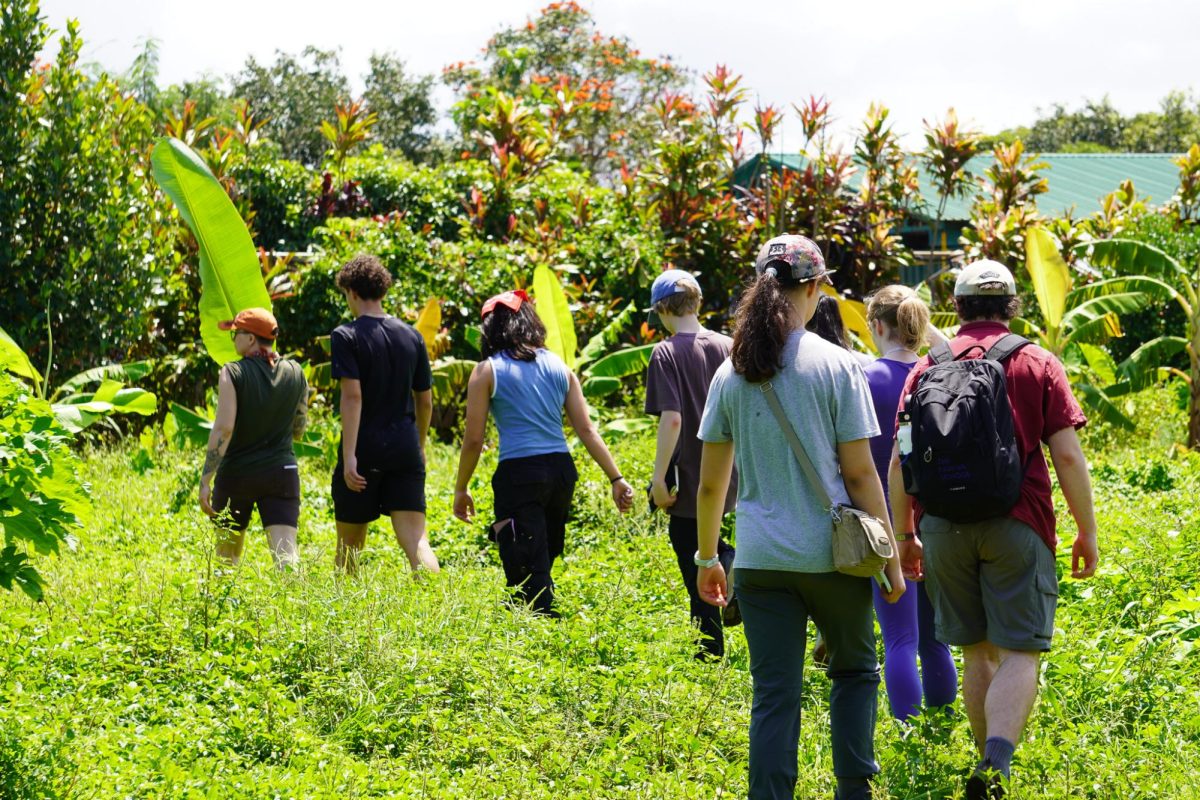
This courtroom scene was one of many illuminating encounters during Nueva’s ninth-grade trip to San Diego. Over the course of their five-day trip, 24 students explored the complex intersection of migration and identity from behind the camera lens. Students visited historical museums, courtrooms, day laborer sites, and the border wall itself to document the lived realities of the U.S.-Mexico borderlands.
II. What Is the Process?
Before the trip, several students expected immigration enforcement to resemble television footage of raids or chaotic border crossings. What they encountered was unexpected but chilling.
“I was expecting the ICE officers to come in and grab someone,” Elyse D. ’29 said. “But it’s actually a lot of waiting.”
That process of waiting has become increasingly common across the United States. As of March 2026, the national immigration court backlog had reached nearly 3.3 million active cases, with roughly 70% in volving asylum claims. Many immigrants spend years moving through the system. In March 2026, only about one-thirdone third of immigrants facing removal orders had legal representation, and judges issued removal or voluntary departure orders in roughly 80% of completed cases.
In courtroom after courtroom, students watched hearings end the same way. “Almost every court case was basically, ‘Fill out this form and come back in a year,’” Elyse said.
For some students, the hearings also complicated assumptions they already held about immigration enforcement.
Nate S. ’29 said he expected the system to feel harsher and more chaotic than what he observed in court. “I thought it was slightly better [than what I expected], but also that there was a lot to work on,” Nate said. “It was actually reassuring to see that people got due process.”
Still, the courtroom presented a paradox. Judges often spoke patiently and respectfully to families while still enforcing policies that could separate them.
One case in particular stayed with Nate: a family in which an aunt with a disability faced deportation while the rest of the family was allowed to remain in the United States.
The moment transformed immigration from a political debate into something painfully human: “I couldn’t imagine being in those families’ positions,” Nate said.
III. Who’s on the Ground?
Early on the fourth morning of the trip, students volunteered with Border Angels, a humanitarian organization supporting migrants and day laborers throughout Southern California. They distributed care packages and spoke with workers who were gathered in parking lots and on sidewalks across the city, waiting for temporary jobs in construction, landscaping, and manual labor.
Some had families elsewhere in the United States. Others had none nearby at all.
Eduardo, a man in his 50s from El Salvador, had spent four years in San Diego while his wife remained unable to join him in the United States. Ysidro was 78 years old with three kids, and was still searching for work because he could not afford to retire. Noel, 31, was alone in San Diego with no family.
California recently expanded legal protections for vulnerable workers, including laws targeting wage theft and unfair immigration-related labor practices. Yet many day laborers still face unstable employment, unsafe conditions, and inconsistent pay.
Across language barriers, students struck up conversations with the workers. Elyse remembered one particular interaction with a Haitian worker. After learning that the worker spoke neither English nor Spanish, she and another student attempted to greet him using Haitian Creole phrases they had searched for online.
“At first we were speaking in horrible accents,” she said. “But then he started teaching us vocabulary words by pointing at objects around him. Seeing his face light up after we spoke to him in his native language kind of made my day.”
Ana Miguel, a guide with Border Angels, told students that interactions like those mattered more than many people realized.
“Kindness is free. Empathy is free,” she said. “People think helping is this huge thing, but sometimes it’s just talking to somebody.”
IV. What’s Beyond the Wall?
By the end of the trip, students found themselves standing near the border wall.
The structure stretched across the landscape in towering metal slabs lined with layers of fencing and barbed wire. Behind them sat federal buildings and surveillance infrastructure. On the other side lay Tijuana, dense and lively against the hills.
“I hear so much about the border wall in the news,” Elyse said. “And then suddenly it was right there.”
“It felt super foreboding,” Nate added.
Recent border policies have sharply restricted access to asylum at the southern border, contributing to major declines in migrant crossings compared to previous years. Meanwhile, humanitarian groups continue to report deaths from dehydration, falls, and exposure as migrants attempt crossings through increasingly dangerous terrain.
Students also learned how the recent border wall expansion has disrupted wildlife corridors and indigenous lands across the region. Some newly constructed sections have even been painted black to increase surface temperatures as a deterrent.
For many students, the wall itself felt less like a political symbol and more like evidence of fear.
Visiting the Otay Mesa Detention Center left a similar impression. Located among warehouses and industrial buildings east of San Diego, the privately operated facility houses more than 1,000 detainees daily. The fencing and barbed wire around the building cast stark shadows on the sand as the guide described the poor living conditions and limited oversight inside the center.
“My first reaction was: wow, this looks like a prison,” Elyse said.
In recent months, San Diego County officials have fought for greater access to inspect the facility, arguing that oversight is necessary to investigate potential health and safety concerns.
Throughout the week, students repeatedly returned to one idea: how easy it is to become desensitized to stories that constantly appear online.
“We hear so many tragic stories every day that eventually you stop knowing what to focus on,” Elyse said.
But in San Diego, immigration became something more than a headline or hot- button issue. Understanding and confronting the immigration process meant seeing the face of a mother giving up on a years-long asylum case. Workers waiting for jobs before sunrise. Families living between walls, literally and figuratively.
“I don’t think you can fully understand it without actually seeing these systems in person,” said Nate.