

























I entered the theater with high hopes but left with legs that had fallen asleep. “Avatar: Fire and Ash” promises a return to Pandora, an alien moon with exotic wildlife and captivating creatures—but falls short.
The film strives to continue the worldwide success of its 2009 and 2022 predecessors. It follows the same family led by Jake Sully (Sam Worthington), a paraplegic marine-turned-Na’vi war leader, and Neytiri (Zoe Saldaña), his warrior-like mate. Joining them are their children: their eldest daughter, Kiri (Sigourney Weaver); their misunderstood son, Lo’ak (Britain Dalton); their youngest child, Tuk (Trinity Bliss); and an adopted human son, Spider (Jack Champion), who is also the biological child of Miles Quaritch (Stephen Lang), a colonel resurrected in a Na’vi body with a personal vendetta against the Sully family.
Set only weeks after the previous installment, “Fire and Ash” launches back into the intensity of the franchise: Pandora, the alien moon that is home to the Na’vi, faces threats from futuristic human colonizers. The death of the Sullys’ eldest son at the conclusion of the previous movie raises the stakes, forcing the family to balance hate and grief.
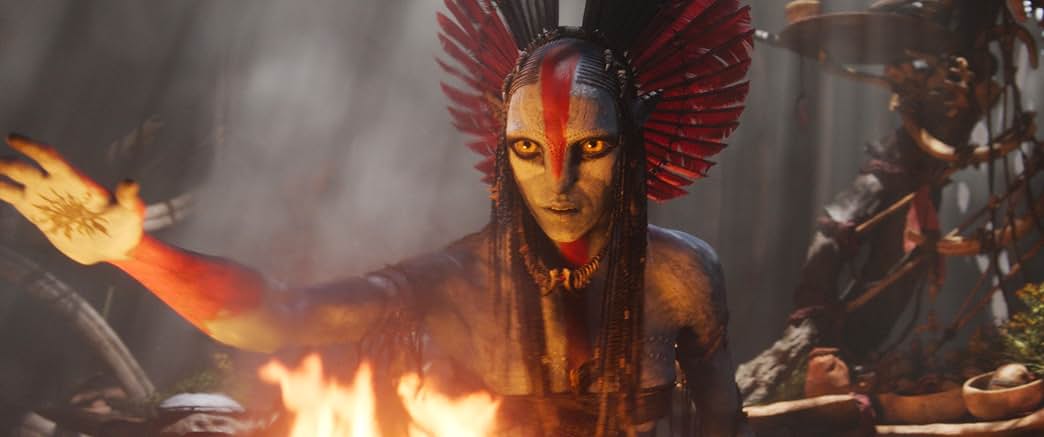
New to this film is the Ash Clan, whose seductive, ruthless leader Varang (Oona Chaplin) is, arguably, the highlight of “Fire and Ash.” Rejecting the nature-worshipping tendencies of other Na’vi clans, Varang is vicious: her quest for world domination intertwines her in the conflict between Jake and the primary antagonist, Quaritch. Long-standing grudges manifest themselves in artillery-heavy battle scenes filled with cartoonishly evil humans and the warrior-like Na’vi.
These repetitive action scenes oversaturate the movie and make it drag. After rehashing familiar motifs from previous films—environmental destruction, the whale-like tulkun, and a few too many scenes in which the Sully children are kidnapped—too much of “Avatar: Fire and Ash” becomes boring. The runtime, which is more than three hours, detracts from the audience’s immersion in Pandora rather than augmenting it. Even the beautiful scenery cannot remedy the dullness.
While many plot points could have been cut from the film, “Avatar: Fire and Ash” delivers moments of nuance. The tension between Neytiri and Sully’s adopted human child, Spider (Jack Champion), provides an interesting counterpoint to the blatant racism the colonizing humans direct towards the Na’vi. An Abraham and Isaac-esque moment—a father’s betrayal of his son—calls for the viewer to question the black-and-white morals presented elsewhere. In this film, Cameron also briefly explores other themes, like suicide, neglect, and family. However, this aspirational complexity is hampered by the lackluster script, which is riddled with the teenage dialogue of “bro” and “cuz.”
Three movies in, “Avatar” has lost its appeal to novelty: the visual prowess that serves as the franchise’s highlight, despite still being at the forefront of the industry, is unable to compensate for the repetitive elements it is used to depict. The landscape and action scenes can only hold audiences for so long. If the “Avatar” franchise is to be the magnum opus James Cameron hopes it to be, it will need fresher themes, and perhaps a new set of eyes.