


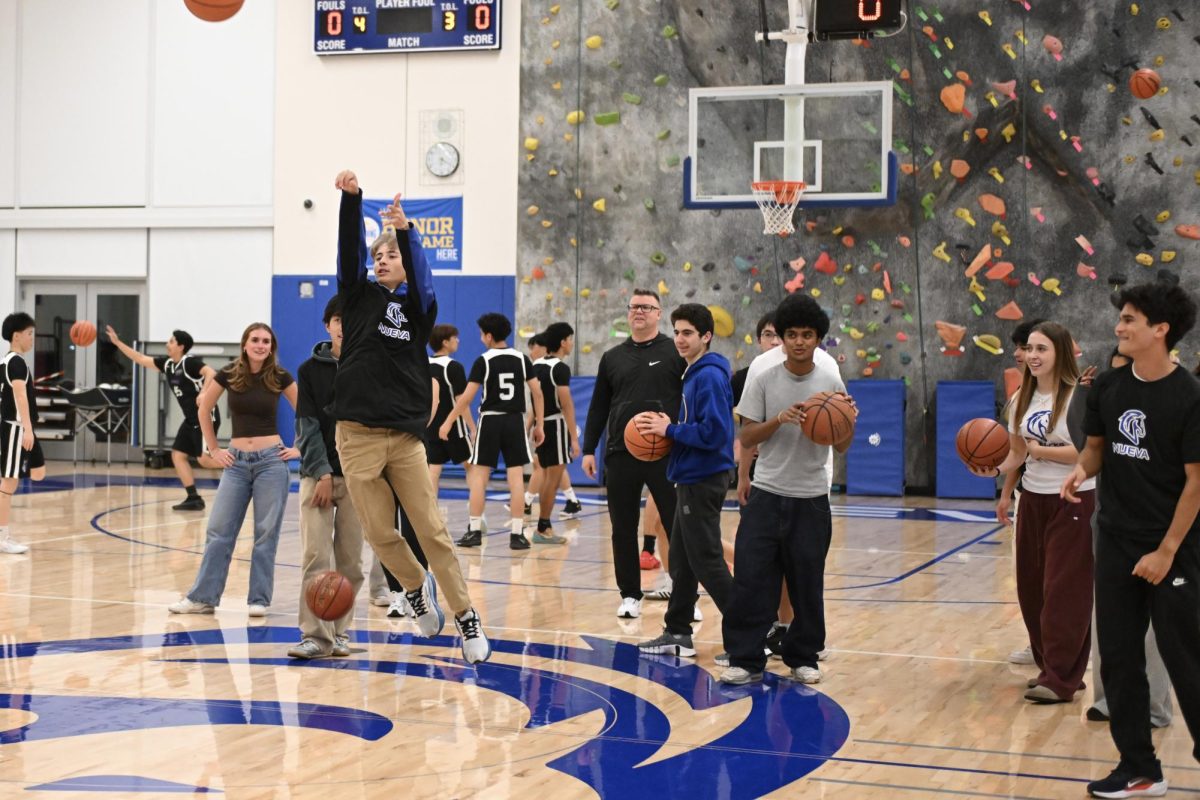















On Wednesday night before dress rehearsal, the Hillsborough campus gym looked like a hurricane had just swept through. Actors in full makeup sat cross-legged on the stairs eating sandwiches. A cast member sprinted across the gym, getting mic’d with only the bottom half of their costume on. Garlands of flowers lay tangled across the floor, glitter clung stubbornly to the blue tarp, and a white wooden arch leaned against the wall. Tech students hurried across the stage, moving set pieces and calling out notes as they worked.
Then, the cast gathered in a circle onstage. “Midsummer!” they shouted together—loud, earnest, and focused in the way people get when they know exactly how much work they’ve put in. This was the world behind the Upper School’s production of Shakespeare’s A Midsummer Night’s Dream.
The fall play ran from Friday, Dec. 5, to Sunday, Dec. 7. Set between Athens and the forest beyond it, it follows lovers who fall in and out of love with each other, fairies who interfere for their own amusement, and a group of amateur actors (“mechanicals”) attempting to stage a play. As spells are cast and plans unravel, characters make impulsive choices that send the story spiraling.
Director Zoe Swenson-Graham described the play as “joyful and light,” a mood that was woven into every corner of the production: flower-draped balconies, a warm, fairy-lit forest, and the contrast between Athens’ rigid formality and the softness of the woods. Set and costume designer Zach Isen’s work brought that vision to life through fabric choices, painted textures, and careful set dressing, making the world onstage feel effortless.
During rehearsal, the two directors moved like a practiced system. Swenson-Graham handled blocking and tone, while Isen stabilized everything around it—cues, props, costume adjustments, and last-minute fixes. But even in the rush of tech week, both remained remarkably calm.
Their measured approach set the tone for the room and made taking risks feel safe. “I’ve never felt scared to try something,” Jackson N. ’29 noted. “I think that’s a really important factor to me experimenting.”
That welcoming culture was amplified within the cast. With only 12 members, everyone had more chances to actually get to know each other.
“I’ve never done Nueva theater before, but I really feel like a part of the community now. Everyone’s so welcoming,” Elyse D. ’29 said.
Huxley E. ‘29 echoed that sentiment: “In bigger casts, I don’t even know everyone’s names. Here, I’ve gotten to know, and honestly love, every single person.”
That closeness showed up in the smallest moments: spoon-feeding each other Smarties while doing makeup, the Italian run where everyone lost it, the 10-foot trains on Titania and Oberon’s costumes tripping people up backstage. Tech week, notorious for exhaustion, somehow felt lighter. “The community made it so much less tiring than I thought it was going to be,” Dybbs commented.
Despite the jokes and rituals, the work was serious. Once rehearsal began, the cast snapped into focus. In Shakespeare, every word, rhythm, and pause can matter and be imbued with meaning. The cast unpacked the text through dramaturgy packets, modern translations, and iambic pentameter lessons. Blocking and physicality became just as important as the language itself.
Understanding their characters required equal effort. Elyse spoke about playing Starveling as the Wall in the play-within-a-play, explaining that her performance was intentionally flat because “[Starveling] is really bad at acting.” It was a choice she refined carefully, leaning into stillness and timing to make the humor land.
For Oliver R. ‘29, his Puck only fully came together through physicality.
“He’s a little gremlin,” Oliver said. “He loves messing with mortals. But he also uses Oberon as an escape route—like ‘don’t touch me, I know Oberon.’”
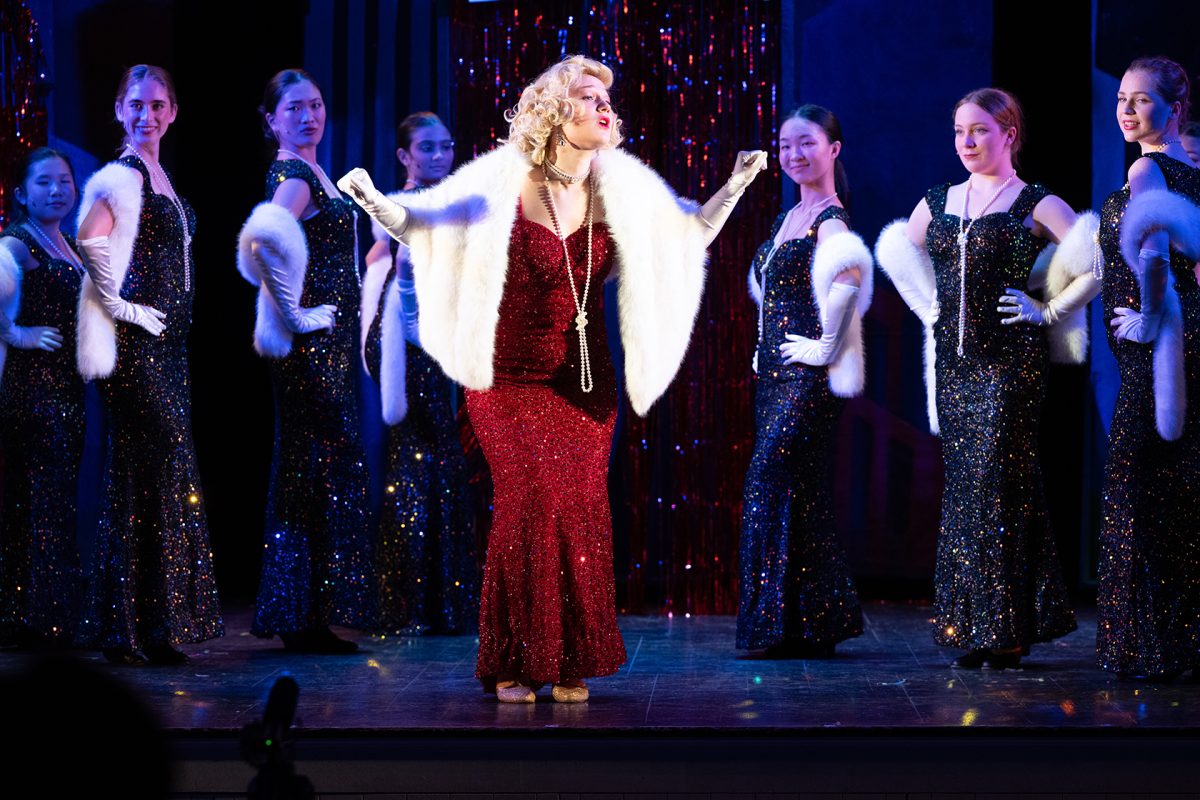
When the lights rose on Athens on opening night, the cast settled fully into the world they had built. Puck darted across the stage with restless, mischievous energy. The lovers threw themselves into their argument with total commitment. Titania and Oberon commanded the space, their ornate costumes amplifying their power. The mechanicals wrung every possible laugh from their scenes.
Kylie E-M. ‘29, who played Titania and Hippolyta, aptly summarized the experience. “There are so many interpretations of Shakespeare,” she said. “It’s a beautiful piece of art, and it’s [been] really fun to get to experience and play around with it.”