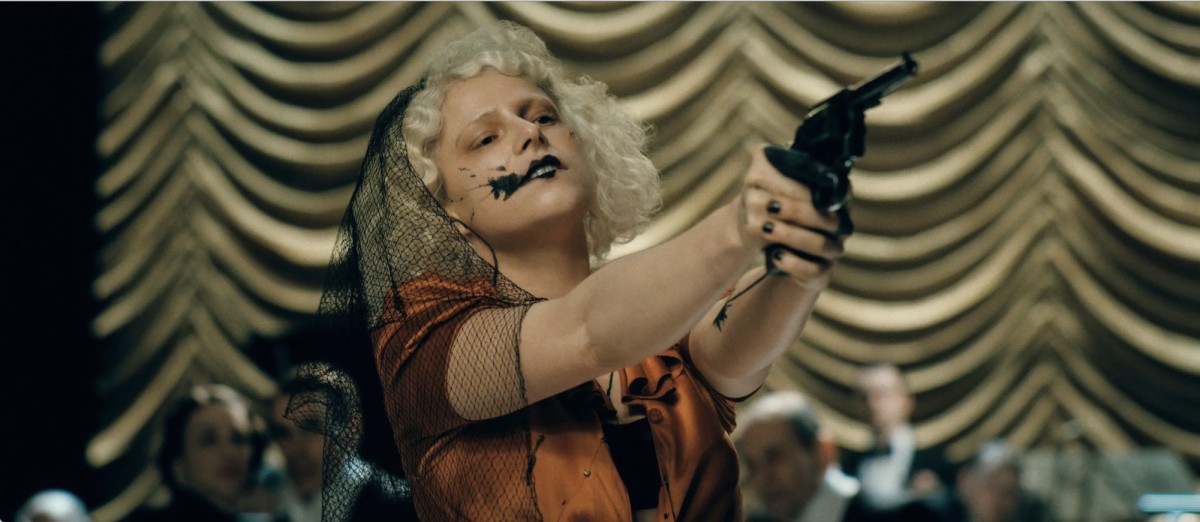












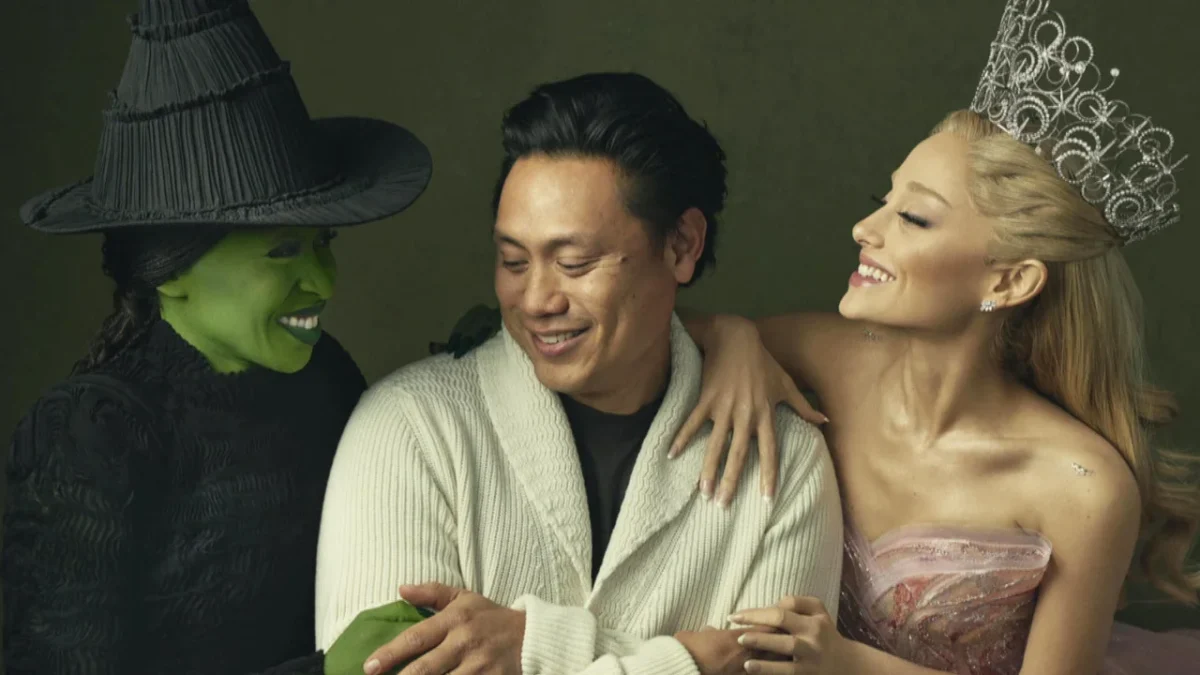
The original “Wicked” musical is magical for its intricate set design, bizarre hair updos, and of course—the heartwarming story and spine-tingling powerhouse vocals of two witch friends. Its film adaptation, released just before Thanksgiving, nearly explodes from even-grander sets, sweeping cinematic dance numbers, and the star power that is Cynthia Erivo and Ariana Grande, who play Elphaba and Glinda, respectively.
The story of “Wicked” is set in the Land of Oz and is considered a prequel or reimagining of “The Wizard of Oz.” The tale follows two young witches, Elphaba and Glinda. Elphaba, while experiencing discrimination for her green skin tone, is incredibly courageous and talented; Glinda, blonde and peppy, is frequently underestimated for her intelligence. While the two meet only briefly, they impact each other for the rest of their lives. Their paths eventually diverge into their better-known titles as the “Wicked Witch of the West” and “Good Witch of the North” of Oz.
Within such a complex and glorious narrative, it could be easy for most directors to lose themselves in the fantastical elements. But, as I sat in the theater with teary eyes and a mascara crisis, I quickly realized that “Wicked” director Jon M. Chu easily defies the story’s could-be fluffiness and instead grounds it in gravity (pun not intended).
Chu achieves this depth by embracing the humanity of the story and paying attention to both the small and large details. He finds a voice for not only the characters—but for himself, his actors, and the film’s screenwriters.
Chu’s passion radiates throughout the film and is explained by his love for “Wicked” since its earliest days. While attending USC as a film student, Chu caught a pre-run of the show in San Francisco with his family. “I remember thinking, this is the most cinematic show I’ve ever seen,” Chu said in a New York Times profile.
Since that “Wicked” viewing in 2003, Chu developed his craft for directing feature films in the following two decades. His work has always been intertwined with music and culture, with previous filmography including Justin Bieber documentaries and “Step Up” dance film sequels. His most notable and recent works include “Crazy Rich Asians” and “Washington Heights.”
Upon reflection, it seems almost as if Chu’s unique filmography had been preparing him to direct “Wicked” one day. As I absorbed the film’s aerial shots, large cast, and other-worldliness, I was reminded of Chu’s work from “In the Heights” and “Crazy Rich Asians” in the best way. Reminders, yet refreshing.
With his unique directorial style, Chu gives us appetizing elements of Ozian culture. For example, he hired a pianist to play live for each song, transforming each set into a makeshift recording studio for Erivo and Grande. In today’s film industry, this approach is unheard of.
Even more illustrative of Chu’s unique direction, though, is his use of close-ups in the most climactic scenes. Setting the film apart from a play’s unchanging distance, Chu brings us so close to Erivo and Grande that we can see beads of water forming in their eyes just about every other scene. I hate to admit it, but my eyes mirrored theirs every step of the way.
To me, it seems that Chu connected deeply with each of his actors—and especially his leading ladies—for their easy shows of emotion can only be a manifestation of a comfortable and collaborative film set. Chu’s direction is unignorable in his actors’ emotional performances, which many online predict will win them Oscars and the like.
Chu’s impact on the film’s narrative also extends into its larger significance. While “Wicked” seems to diverge at first from Chu’s more cultural-themed stories, it’s more a continuation than anything else.
Like others have pointed out online, Chu develops the core essence of the Wicked story by casting Erivo. Erivo, a queer Black woman, is just the second Black Elphaba in history.
Chu has known all along that “Wicked” is a story of otherness, racism, homophobia, sexism, and all forms of discrimination. “I have my own experiences with being green,” he acknowledged.
With his Asian background, Chu was maybe one of the only directors in Hollywood who could’ve told this story with depth, joy, and a personal touch. His enchanting skill has not only achieved critical and commercial success, but soaring creative success. I think, it’s time to crown Chu as a wizard!