












When the 12-day war between Iran and Israel began last June, Upper School math teacher Roya Curtis immediately contacted her extended family in Tehran—numerous aunts and cousins—to ensure they were safe; thankfully, they responded instantly. Now, more than a month into the ongoing conflict between Iran, Israel, and the United States, her messages and calls remain unanswered.
Amidst the ongoing war, families separated by thousands of miles, like Curtis’s, are unable to guarantee each others’ safety. Yet despite the uncertainty of Iran’s future, Curtis described hope amongst the Iranian diaspora— freedom from the almost half-century-old oppressive Islamic Republic.
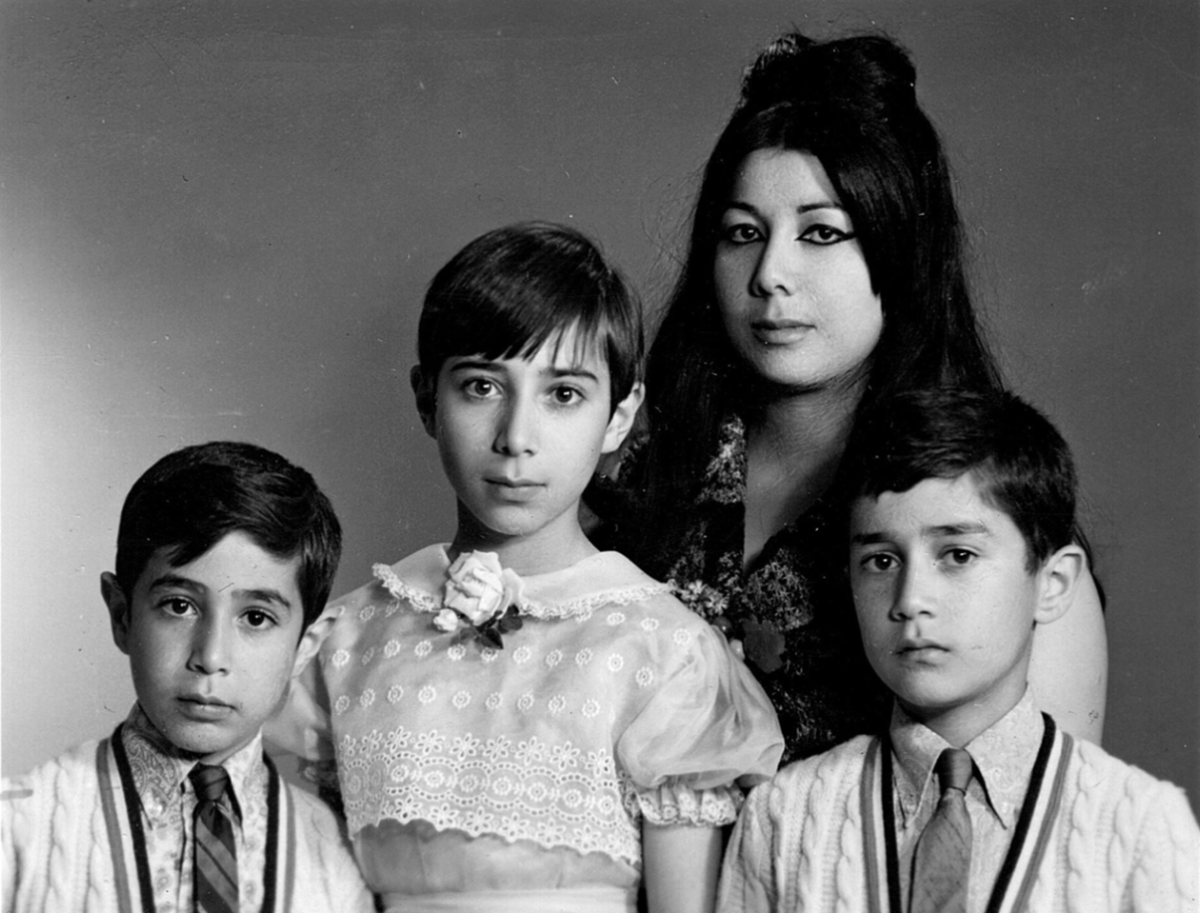
Curtis, who was born in Tehran during the reign of Shah Mohammad Reza Pahlavi, has fond memories of the twilight years of the Pahlavi dynasty as a period of modernization and improved civilian life.
“Iran was so progressive and modern. In the early 70s, [Tehran] used to be the Paris of the Middle East. It was a place people used to visit for vacation,” Curtis said.
An authoritarian leader backed by the United States, the Shah was nonetheless able to bring about rapid development and economic growth in the 1960s and 70s on the back of the country’s oil industry. In 1979, following protests against both government repression and secularism, his government was overthrown and replaced by the Islamic Republic under Ruhollah Khomeini. Curtis described how the Islamic Republic embraced an ideology of Shia fundamentalism.
Curtis said the regime was “reverting this country to something that was 200 to 400 years past. But they wanted it that way. And people went for it. All because it was part of religion.”
Curtis’s father, a general who was the Shah’s personal pilot for 18 years, was forced to flee the country when the Republic took power. He sought political asylum in the United States and joined Curtis, who was already in the United States, for boarding school.
“I wish he were alive [now],” Curtis said. “He thought freedom from the Islamic Republic would never happen.”
Since 1979, the Islamic Republic’s government has imposed strict restrictions on human rights such as free expression, women’s rights, and religious freedoms, while simultaneously experiencing prolonged stagnation in economic growth amidst American sanctions. In late 2025 and early 2026, the tension in Iran between the people and government came to a head, with mass protests against Supreme Leader Ali Khamenei resulting in harsh government suppression estimated to have killed at least 5,000 civilians, with the actual number potentially being multiple times higher, according to The New York Times. These protests are led by young women, students, and activists who are attempting to fight back against the Islamic Republic. Presently, Curtis views the ongoing conflict with mixed emotions, a balance between hope for an end to the regime and sadness at how the war is unfolding.
“[Members of the] diaspora who were initially happy are not happy [anymore]. There are people dying. There’s a lot of emotions. There’s a lot of sadness,” Curtis said.
Still, she remains hopeful for a positive outcome to the conflict.
“I would like to see peace,” she said. “I would like to see less killing. I would like to see the rebuilding of Iran and definitely freedom from this regime. How to achieve that is the question.”
Ultimately, Curtis believes that the prevalence of Iranian culture will lead Iran towards a better future. With a history spanning millennia, she is confident that the people can retrace their steps and return Iran to the values she grew up with.
Mar. 20 was Nowruz, the Iranian New Year, celebrated for the triumph of light over darkness. A tradition of celebrating the New Year is to jump over a fire and make a wish. Curtis assumed many Iranians, both in the country and the diaspora abroad, alike wished for the swift ending of the conflict.
“This country was built on human rights and amnesty, and they don’t have any of that right now. Iranians have preserved their culture, and they are very proud of it. I believe our people will restore Iran to the values we hold dearest to us,” Curtis said.