













A lot of ink has been spilled on the problems facing women in STEM, and for good reason. They are marginalized at every stage, from the high school classroom to the workplace, resulting in a stark gap in representation: women made up only 24% of engineering and computer science majors as of 2022.
The humanities may thus seem as different to STEM as night and day. Women received 53% of bachelor’s degrees in history and the social sciences, and slightly more in graduate and doctorate programs.
The increased prevalence of women in academic history has also coincided with a welcome shift from the overwhelmingly male-centric subject matter that initially defined the field. Since the New Left historians of the 1960s, biographical studies of military and political leaders dubbed the “great men of history” are out of fashion in most university departments; social and cultural history is in vogue.
But that is the world of academia.
The popular conception of history is not reflective of the lineups at academic conferences; it has a lot more to do with the new releases at Barnes & Noble. Those bookstore shelves are still the land of biographies upon biographies about military and political history: the Founding Fathers, the World War II generals, the titans of industry. A 2016 survey by Slate found that 75% of popular history books published in 2015 were written by men, and 70% of the published biographies had male subjects.
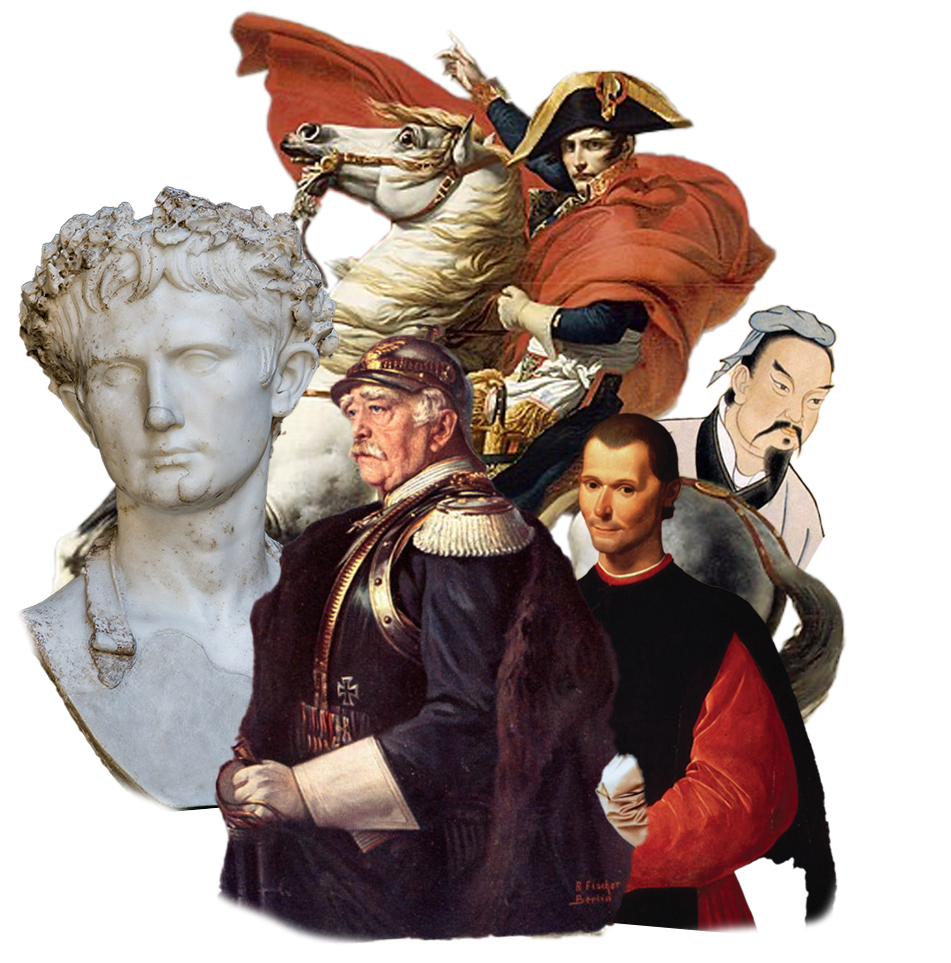
Male-centric pop history is what shapes and informs the interests of chronically online teenage history buffs. As a result, their digital forums are overwhelmingly made up of high school and college-age boys, and while they represent a wide spectrum of political persuasions, there are strong similarities in the ways they approach and think of history. The world of the online history bros has created warped conceptions of both history and masculinity.
Let’s meet the archetypical “history bro.”
He views history as a series of lessons in gaining and applying power, both for himself and his nation. He accumulates a stockpile of biographies on the “great men,” scouring the lives of long-dead leaders for inspiration. The keys to a better life are hidden somewhere within Napoleon’s cavalry maneuvers at the Battle of Borodino. For managing his interpersonal relationships, he’ll look to treatises on grand strategy and the balance of powers (all of these books will be European with the exception of Sun Tzu’s The Art of War).
He is in many ways anti-ideological, valorizing a ruthless pragmatism as superior to any sort of moral code. His personal philosophy is best defined by rationalism: every person and nation-state is perfectly rational and self-serving, and must assess their best interests through cold-hard facts and logic or else be destroyed by those who do.
Given this, ambiguity and subjective experience must be purged from the historical record. The process of learning history for them consists of memorizing facts and dates, detached from human experience or the messy uncertainties of historical memory. At the end of this process, he hopes, he will be able to dominate the past, an unchallenged master of trivia and factual knowledge. I will win the quiz bowl or the West will fall.
Needless to say, history bro circles are home to a lot of alt-right incels. But this is not universally true: many are moderately conservative institutionalists who combine a deep reverence for tradition with a strong aversion to fascist violence, or even still left-wing social progressives. But whether they have a favorite crusader or favorite communist, these core traits of the history bro mindset remain.
So, what happens when women venture into these male-dominated online spaces?
When Lily Z. ’28 joined a Discord server associated with the National History Bee, a quiz-based academic competition, she was one of seven girls out of approximately 200 members. Once her gender was revealed, she immediately received a flurry of messages hitting on her—in public—from boys who had never even met her face-to-face.
“There was a normalized incel-like culture of ‘oh, we’re nerds and we don’t talk to women,’” Lily told me. “And so the women in that space were treated as foreign, exotic, alien objects.”
She cited this general sexism as emerging from their notion of rationalism—women were stereotyped as emotional, irrational, and therefore incapable of “mastering” historical knowledge.
Girls on the server were conditioned to become more “masculine” in the way they spoke, behaved, and interacted with the ideas of history.
“I was put into the position of, ‘Oh, she’s one of the funny girls who knows our B.S. and isn’t into whatever girls are into,’” Lily reflected. “You attempt to rid yourself of feminine features and conventionally feminine ways of speech.”
The historical methods taught by the Nueva history curriculum run counter to the mindset that defines these online subcultures.
“We care way more about reading and interpreting sources, and thinking through broader theories and frameworks of thought,” Lily said. “I think that is a way of getting rid of this sort of masculine, rationalist discourse.”
In comparison to a traditional high school curriculum’s focus on names and dates—the history buff’s weapon of choice—Nueva history classes and electives tend to reflect the social and cultural history that is more prevalent in academia.
“Nueva humanities is more fluid and less rigidly defined around the memorization of dates,” Anika G. ’26 said. “It’s a bit more people-centric, cultural-trends-centric, and maybe anthropologically influenced.”
Still, there can be very real gendered disparities in our classrooms. Discussion-based classes like history have the ability to uplift and validate male voices while girls are pushed to be passive spectators.
“Boys tend to be socialized to assert opinions with more confidence, and girls to put caveats on their own opinions or preemptively incorporate others’ opinions when they present their own,” history teacher Sushu Xia said. “[But] as gendered expectations have changed over the years, I’ve noticed a smaller difference in the classroom.”
This tendency manifests itself across disciplines, but it’s intensified for some by the qualitative nature of history’s subject matter.
“In some of those STEM classes, they’re quantitative, so you can actually prove you’re right about something. If you get enough problems correct, eventually people are like, ‘she probably knows what she’s talking about,’” Anika said. “In history, you can always add one new layer of nuance.”
History teacher Simon Brown noted that methods like small group discussions, whiteboard work, and intentionally mixing up groups can allow teachers to intervene in and break through gendered dynamics.
I think those are all valuable tools in bringing more voices into the classroom. However, teachers can only do so much without intentional change and consideration from male students in those classes.
I worry that the masculine coding of history and its bro subculture is so strong that it puts true parity out of reach. I can’t help but wonder how many girls chose not to explore a potential interest further because of how gendered the field appears. Nonetheless, it is incumbent upon students—including myself—to make our classrooms and our mindset towards history the best it can be.