



















When Minneapolis resident Alex Pretti held up his iPhone to take a video, he should have been protected by the First Amendment. He should have been protected by the Second, permitting his bearing of arms; he should have been protected by the Fourth, prohibiting search and seizure of a person without a judicial warrant.
Fourteen seconds after Pretti was taken to the ground, he was shot 10 times. Numerous videos from bystanders documented the commotion preceding the shooting, and the horror that followed. One other individual was shoved to the ground as agents brandished pepper spray and citizens blew whistles. No video shows any federal agent reading Pretti his rights as they are obligated to do:
You have the right to remain silent. You have the right to a lawyer. You have the right to due process of law.
These constitutional rights are granted to all citizens and residents of the United States, including visa holders or undocumented persons. The Bill of Rights, shaped by nearly two centuries of activism and evolution, exists to protect the people within the borders of this country.
But in the month of January, we have seen how federal agents have disregarded those rights. The flagrant refusal of our constitutional rights is why what happened in Minnesota was so terrifying. Border Patrol and ICE agents haven’t just demonstrated their propensity for violence; they’ve shown us that they don’t care about our basic rights as United States residents.
As we witness the direct violation of individual rights, it’s hard not to feel helpless. This is the tactic of intimidation being used to induce widespread resignation.
ICE and CBP agents have shot at 27 people, eight of which were fatal. Out of these tragedies, Renee Good and Alex Pretti’s deaths emerged to the forefront because they were filmed, because they highlighted the terrible injustice of actions of federal agents in their role of serving this country, and because they evoked a sense of helplessness, grief, and frustration.
I have to wonder, what would happen if I had lived in a different state, taken a wrong turn, or even pulled out my phone at the wrong time?
The deaths in Minnesota strike a chord because they combine our natural empathy with learned helplessness to create the most terrifying anxiety: that our rights might be trampled, and we can no longer expect others to respect them. Those protections don’t exist for any of us.
And in some way, fear has empowered this nation to not fall into the grasp of learned helplessness. This personal and intimate helplessness has drawn us together. Maybe, leaning into our fear is the vulnerability we must show in order to unite in opposition to this violence.
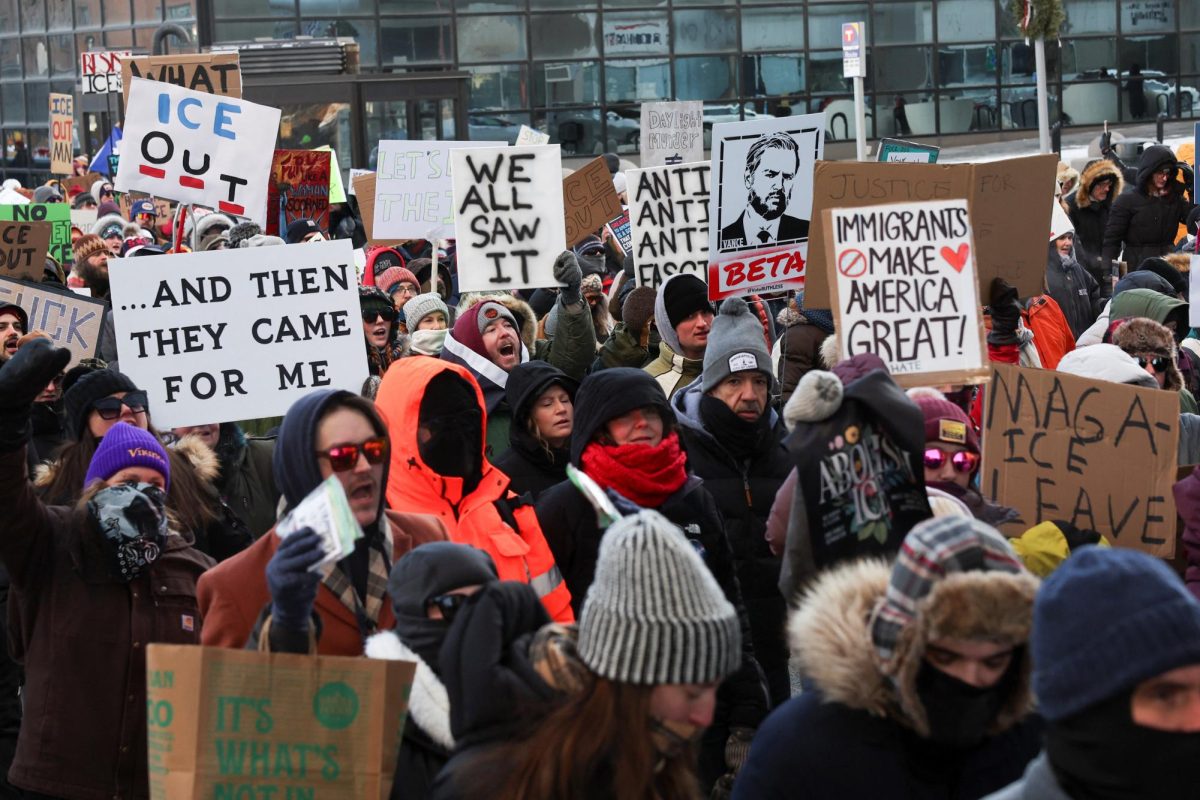
This moment demands real action. Our government has abandoned business-as-usual, and as a result typical responses feel hollow: it is no longer enough to call our senators or memorize our rights. We need solidarity, protest, and organization that does not rely solely on turning to the judicial and legislative mass. The protection of the people’s rights is, and has always been, in the people’s hands.