


























The most significant changes in a classroom do not always come from a new teacher or an impressive curriculum, but from a returning teacher who arrives with renewed energy and ideas for teaching their subject. When teachers are given time to pursue sustained learning in an area of their choosing, their students benefit from the depth, a refreshed perspective, and the enthusiasm that follows.
Great teaching depends on continued curiosity and experience. Nueva already recognizes this through a range of professional development opportunities, including ILC, summer grants, and Professional Development Days throughout the school year. In particular, Professional Development Days offer teachers the chance to learn from their peers and guests and explore new approaches to teaching. These days can provide exposure to new teaching practices or niche areas within a subject, but their limited scope—there are only two on the calendar for the 2025–2026 school year—makes it an isolated opportunity. While these sessions can spark new ideas, they rarely provide enough time to deeply explore or test new approaches, as students benefit more from a semester-long class than from a single workshop.
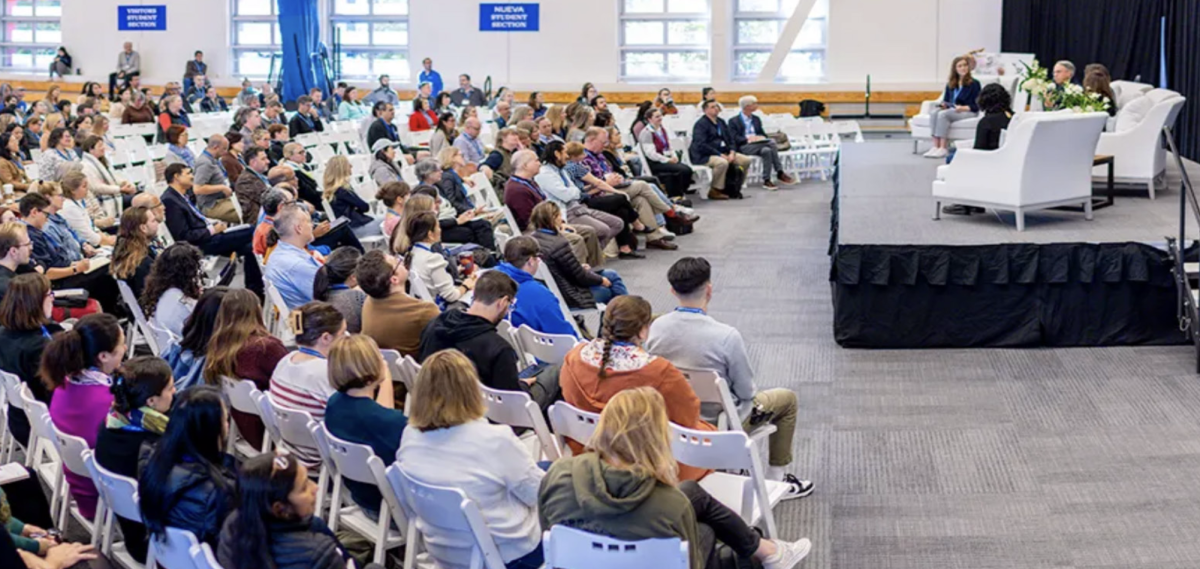
Beyond these biannual sessions, Nueva also offers Personal Professional Development Days, a substantial summer grant program, and hosts an annual learning conference. Teachers are encouraged to utilize the summer grants and Personal Development Days to pursue longer experiences or sustained study. At the same time, every two years, Nueva’s Innovative Learning Conference brings educators from around the country together to reimagine education. Cumulatively, these programs allow teachers to extend their learning beyond the classroom and dive deeper into a subject of their choice.
Sabbaticals, a common practice at the university level for professors, build on this same philosophy. By giving educators the time and space to fully immerse themselves in new environments, sabbaticals allow them to learn and bring back knowledge that they can meaningfully integrate into their classrooms. I believe that to maximize teacher excellence and long-term retention, sabbaticals could become a vital part of Nueva’s approach to teaching and learning. They also offer something less tangible but equally important: a mental reset.
This past semester, I worked as an intern with a history professor who had recently returned from a semester-long sabbatical in France. While abroad, he continued his primary research but also engaged deeply with aspects of French education, which he later brought back to his teaching. In one of our first meetings after his return, he shared new strategies for navigating dense texts—specifically, older 19th-century documents— which I was able to apply immediately to my own work.
Experiences like this help explain why sabbaticals are a valuable benefit that can also support teacher retention: investment in a teacher’s personal growth incentivizes them to stay longer at their institution.
At the same time, concerns about sabbaticals are understandable. Financial strain and the temporary absence of experienced faculty are challenges that require significant planning for the school to fully absorb.
Some potential solutions have been proposed; for example, Director of Teaching and Learning Lauren Pool suggested a teacher exchange with partner schools to reduce the financial burden. Logistical barriers—such as the difficulty of relocating for a semester and the complexities of reallocating professional development funds—had made implementation challenging.
Ultimately, sabbaticals are not just about the teachers; they are about students and the broader school community. My experience working with a professor who returned transformed by his time abroad showed me how quickly the benefits can reach students. I learned more, approached assignments more critically from new perspectives, and thus engaged in richer conversations.
If Nueva wants classrooms to remain lively, reflective learning environments, expanding professional development to include long-term academic and professional explorations could be a meaningful step. Sabbaticals are an immediate investment in teachers—and a lasting, sustained investment in students.