
























In Maggie O’Farrell’s novel Hamnet, there is a line that I have never been able to forget: “Every life has its kernel, its hub, its epicentre, from which everything flows out, to which everything returns.” O’Farrell reflects how moments, whether terrible or glorious, can define a life—an integral theme of the novel. For Will (an introspective, tender-hearted literary version of Shakespeare) and his wife Agnes, the crux of their lives become the death of their son, Hamnet. Both characters are irrevocably shaped in his image—Will, with his empty heart and an immortalized tribute to Hamnet in Hamlet, and Agnes, with her fury and loss of faith in her own mysticism.
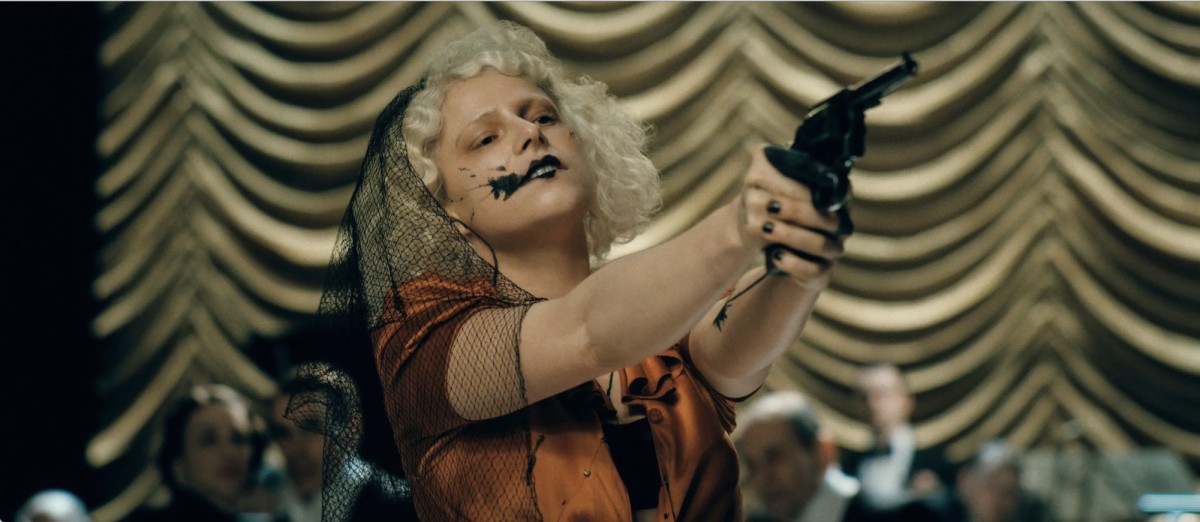
However, in Chloe Zhao’s film adaptation of the novel, also titled Hamnet, this theme, translated into a filmmaking approach, overtakes the movie. The beauty of moments is in knowing which one deserves more time and care. In the film, widely released on Dec. 5, many corresponding scenes of the first half are given the same relevance in the narrative. Audio and visual details overlap to string together a shaky sketch of the love between Paul Mescal’s Will and Jessie Buckley’s Agnes.
The film is at its best when Zhao lets the camera simply sit, reverently tracing the fire’s light on Hamnet’s feverish skin and the tragedy in Buckley’s’ voice. The actors become pitch perfect in their subtlety—I was surprised by how real Mescal could make the Bard, and how utterly human Buckley made Agnes. With every guttural howl and shaky word, I began to care immensely for the couple, trying to understand who they are supposed to be in a world without Hamnet.
Hamnet is ultimately worth a watch, and a film filled with excellent acting and emotion—that is, when it gives its actors enough space to simply tell the story.