






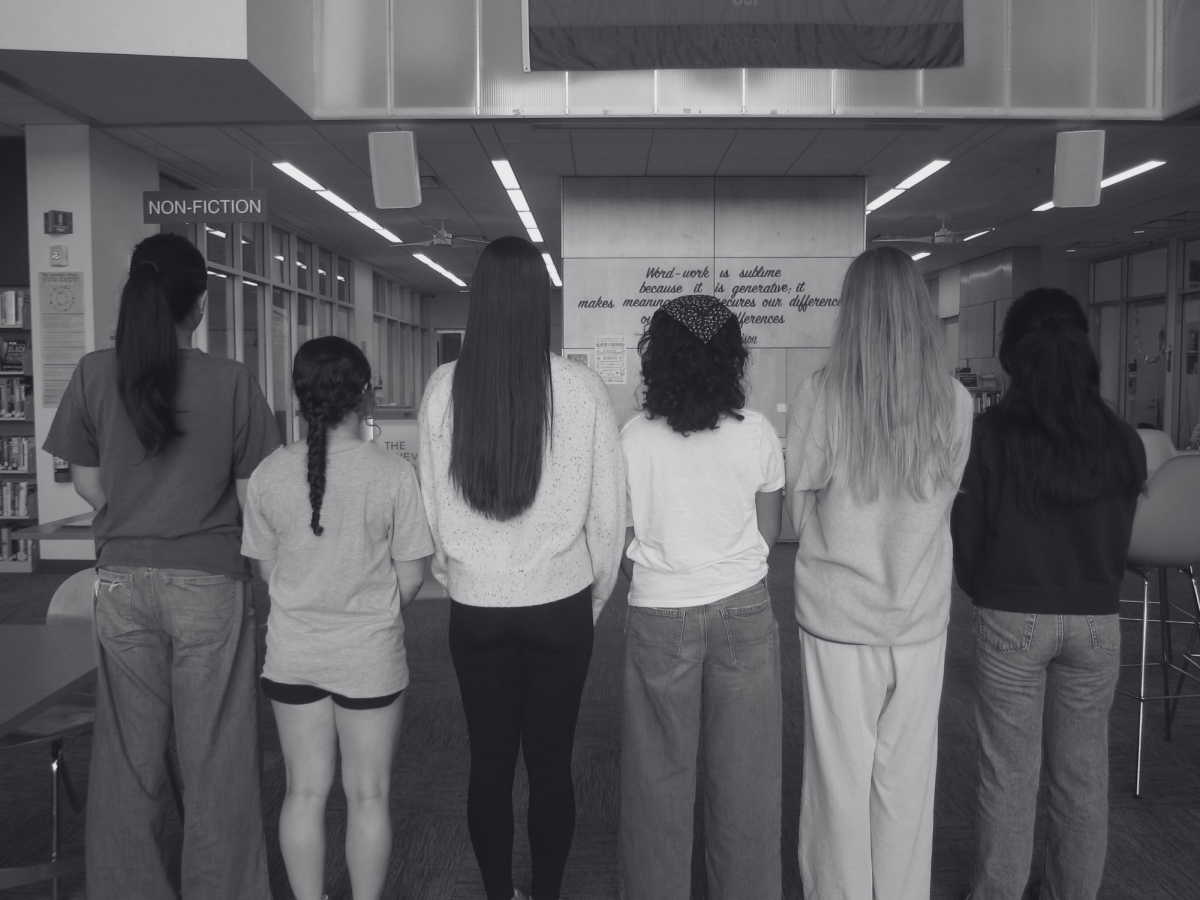





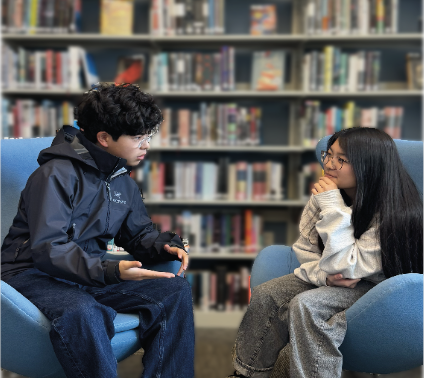
Nueva students don’t talk. While we often have plenty to say—in class discussions, in group chats, and casual hallway conversations—when it comes to sensitive or controversial issues, many of us say very little, if anything at all.
Our school values student voices and opinions. At the same time, our culture has produced self-censorship among students. I feel that the silence of the student body on topics ranging from domestic politics to Israel and Palestine is not due to ignorance or disinterest, but a sign of the systemic pressures they’re experiencing, on campus and off.
Last semester, a student in one of my classes expressed a religious belief and was immediately, visibly judged by their peers: side eyes and disapproving frowns that created palpable tension in the class. That viewpoint was a minority position, and it seemed to me that my classmates sought to dismiss rather than understand it. Too often, the culture at Nueva favors consensus, and as a result alternative perspectives can be marginalized or shamed. The social penalties for expressing a minority belief—being labeled ignorant or morally suspect—can follow a student long after the conversation ends.
Compounding this is people’s tendency to not ask follow-up questions that could clarify and better understand someone’s views. Students’ opinions are frequently taken at face value, interpreted in the worst possible light, or shut down before clarification is even possible. Basically, people are predisposed to listen to respond rather than to learn. In class, this makes students hesitant to ask or answer questions for fear of being misunderstood. Together, these patterns create a mindset that treats difference as discomfort and curiosity as risk.
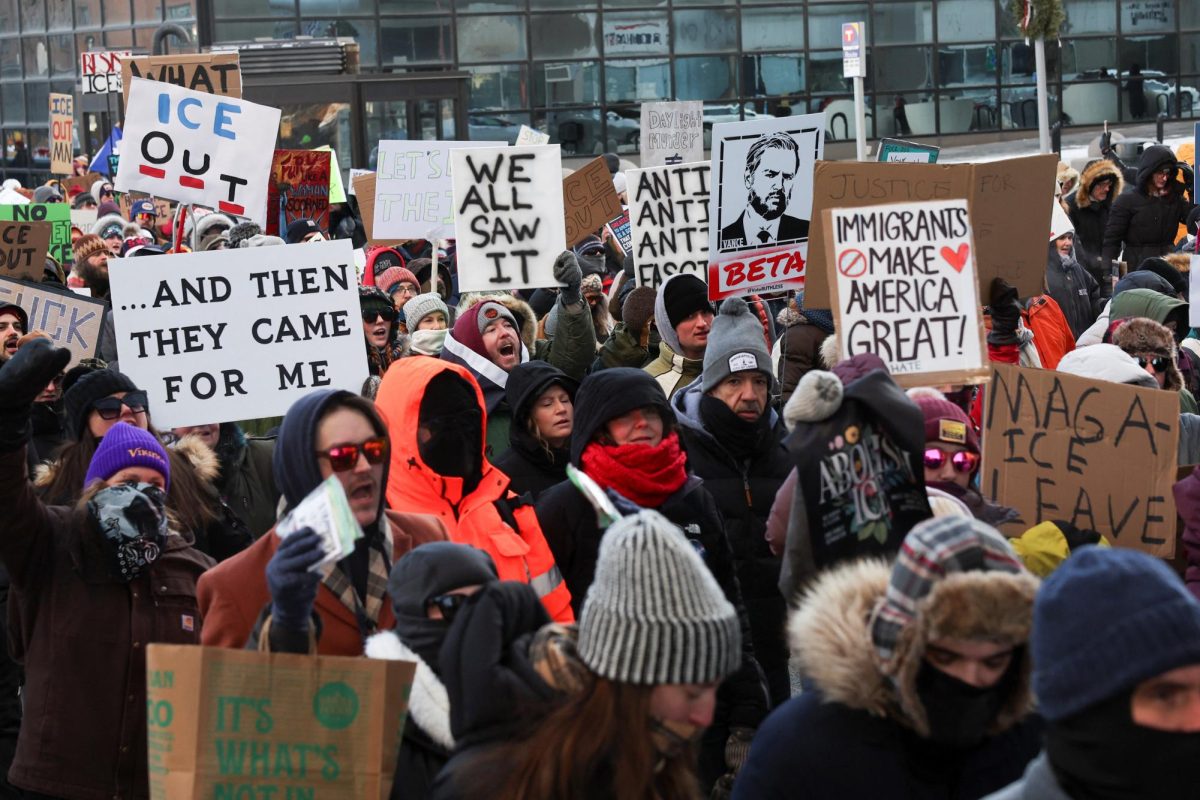
Today’s politics heightens this dynamic. Nueva’s overwhelming left-of-center majority—among students, faculty, and parents—makes it difficult for views on the right and center of the political spectrum to find space. Although the school presents itself as apolitical, faculty members sometimes share their own political reactions in ways that subtly reinforce the dominant perspective. After the 2024 presidential election, for instance, some teachers did express their disappointment in the outcome during classes. My issue is not their personal views but with the pressure such comments place on students, who may feel they must align with—or mirror—those reactions to maintain social or academic standing.
Conversely, I cannot conceive that a right-leaning teacher would have expressed their joy about the same election results in a classroom setting. This asymmetry illustrates how certain opinions feel permissible while others feel unspeakable. When students cannot tell which opinions are a shared community sentiment and which are simply the loudest voice in the room, it becomes nearly impossible to know when disagreement is allowed.
Over the past two years, the school has increasingly focused on civil discourse. Assemblies, advisory activities, and mindful spaces have all been tried as ways to get the students to hold dialogues about sensitive, often controversial issues, and to do so with respect, even in disagreement. These initiatives are well-intentioned, but I feel that they still haven’t adequately addressed the crux of the underlying cultural issue.
This tension runs counter to Nueva’s stated values. Our freedom of expression feels muted, not by rules and policy, but by culture. Addressing this issue requires not a policy shift but a cultural one.
The first step is acknowledging the real problem: many students instinctively respond negatively to ideas or beliefs that differ from their own. Once we recognize this pattern, we can begin to build a community where curiosity—not judgment—is the default.
The next step is promoting genuine inquiry and an attitude that does not assume we already know. Asking questions such as “Why do you think that?” should not feel risky or combative. Instead of being met with silence and side-eyes, students can facilitate positive discussions that yield more understanding, not less.
One more concrete solution is to implement a required learning module for all students on constructive disagreement, modeled after Harvard University’s “Perspectives” module. Harvard introduced this online module after identifying similar issues: a lack of civil discourse, widespread silence, and marginalization of alternate perspectives. The results from the Class of 2028’s trial run of the online module were overwhelmingly positive. Harvard found that “86% and 82% of students respectively “said that they practice what they learn from Perspectives,” and “the modules helped them feel more confident having difficult conversations with diverse perspectives or experiences as their own.”
My idea for replicating this course at Nueva would be to break up the module into multiple classes over the course of a semester during assembly time. The module’s first section would be targeted towards encouraging students to interact with nuanced ideas and avoid preconceived notions. The second portion would concentrate on refocusing how we interpret others’ opinions and moving away from scanning every discussion first for what ‘offends’ us, developing a “thicker” intellectual skin. The last section would pinpoint the difference between disagreement and harm.
Conflict and disagreement are a part of learning, not a failure of empathy. Teaching students how to disagree respectfully, without expecting emotional alignment, would serve as the base foundation for the expected civil discourse norms. The overarching goal of this course is to remove the structural barriers that prevent students from expressing themselves.
Nueva’s silence is not a lack of caring or opinions, but a response to cultural pressure. True inclusion allows disagreement and fosters positive empathic discussion. Nueva must cultivate a climate where speaking thoughtfully and respectfully is as natural as staying silent.