












Since June 2025, “No Kings” protests against the Trump administration have swept across the country. Organizers say the movement is meant to offer a peaceful but powerful statement against what they view as an abuse of presidential power.
On Oct. 18—now referred to by organizers as “No Kings Day—thousands of demonstrations took place across the country. In San Francisco, hundreds of protesters gathered on Ocean Beach to form the phrases “NO KINGS” and “YES ON 50,” referencing Proposition 50. Members of the Nueva community joined protests throughout the Bay Area, describing a largely positive atmosphere and a shared commitment to peaceful demonstration.
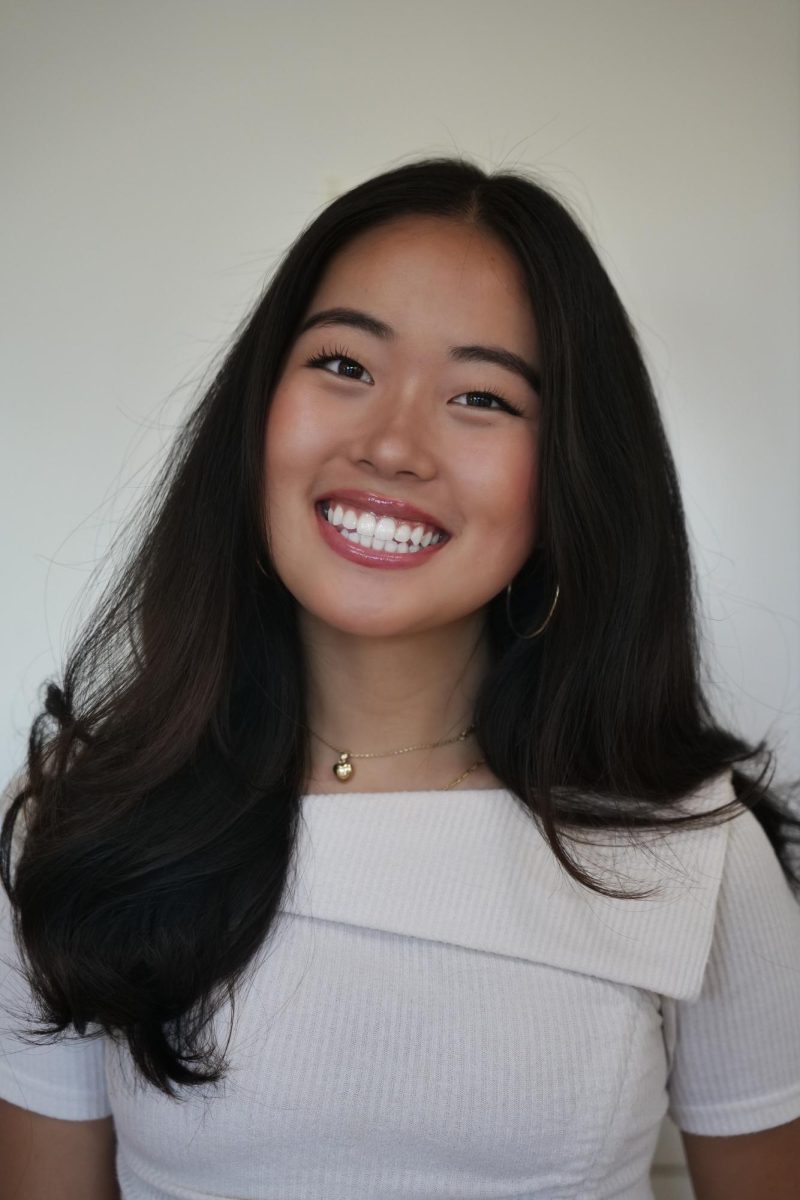
Andy M.
Andy M. ’26 attended a protest at Hillsdale that was much smaller than the demonstrations in bigger cities, but still held its own in terms of positivity and energy.
“It was really exciting,” Andy recalled. “I think a lot about politics all the time, but I haven’t really been to rallies to express my political opinions before.”
The signs reflected a mix of urgency and wit, as protestors used humor to engage with the seriousness of their cause.
Andy’s sign read “FROGS AGAINST ICE” in reference to a protester in Portland dressed up as an inflatable frog who got pepper-sprayed by federal agents.
The frog has since become a symbol of resistance to government officials such as White House Press Secretary Karoline Leavitt, who have labeled the No Kings protesters as ‘terrorists’ and ‘violent criminals.’ Demonstrators have embraced this symbolism by wearing inflatable frog costumes, along with a variety of other blow-up animal outfits.
“It’s really hard to say that [the protesters are] terrorists if they’re bouncing around in frogs,” Andy said.
Elie W.
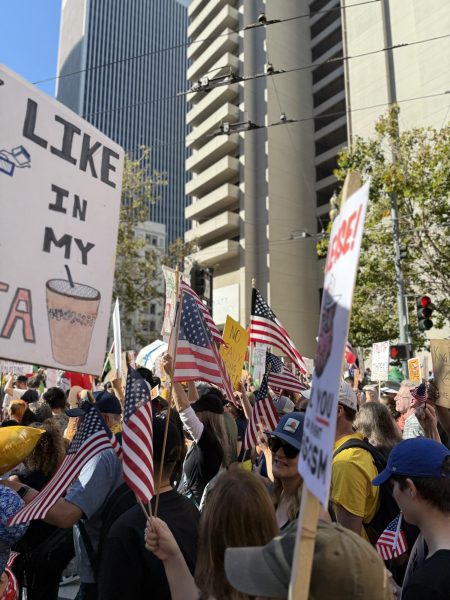
The sound of drums echoed down Market Street as the crowd moved forward: steady, insistent, impossible to ignore. To Elie W. ’26, the rhythm captured the spirit of the day.
“It felt like a parade,” Elie said. “There was so much energy, life, and vibrance.”
Elie joined tens of thousands who filled the streets—nearly 50,000 people, according to official organizers. The march began at Embarcadero and ended at Civic Center, where speeches called on participants to turn outrage into action.
“Everything that’s going on in the world right now makes me angry,” Elie said. “This was the perfect opportunity to say that I’m not just watching bad things happen—that I can be part of a solution.”
Initially, Elie had worried about clashes with the police, having seen pictures of protestors being teargassed or shot by rubber bullets in the media.
At the protest, however, the atmosphere was generally positive. Police and crossing guards kept the route safe—“people for people,” as she described them.
At one point, though, Elie did notice pro-Trump counter-protesters trying to provoke the crowd.
“They were shouting, but these white men would fight back against them, which I thought was really important to see,” Elie said.
The moment evoked reflection about her own place in the movement.
“Being white does grant me privilege,” Elie said. “But it’s so important that white people say, ‘just because we’re white doesn’t mean we shouldn’t be fighting.’”
Though Elie doesn’t believe protests alone can create change, she sees them as essential to building a movement.
“[Protesting] is the power of the people,” she said. “This is just the beginning of the movement against the administration.”
Anya O.
Homemade signs rose above the marchers in San Francisco, bobbing with each step through the street. Anya O. ’26 carried one that read “I ONLY LIKE ICE IN MY HORCHATA,” a jab at Immigration and Customs Enforcement’s treatment of immigrants.
“When the government tries to limit free speech or access—like with immigration policy—it’s important for us, the people, to stand up and speak out,” Anya said. “That’s the power we have.”
Anya described her connection to immigration as personal. Her family came to the U.S. during the fall of the Soviet Union as Russian Jews.
“I’m a first-generation American,” Anya said. “To see the government trying to control immigration, when that’s what this country was built on, feels very anti-American.”
Anya also pointed to how policy decisions affect broader communities.
“As a queer person, my rights feel targeted, and that’s scary,” she said. “But even if it’s not you being targeted right now, it’s still your problem. It’s everyone’s problem.”
Anya spoke about participation as central to democracy.
“I think it’s very important for anyone to stand up for what they believe is right because this is a free country,” she said. “Even when the government abuses its power, we still have a voice.”
By the time the crowd reached the Civic Center, the rhythm had softened—posters tilting, voices fading to conversation. Anya reflected on the message at the protest’s core.
“It reminded me how powerful we can be as a country and as a movement,” she said. “You have to keep using your voice and knowing your rights—that’s what keeps democracy alive.”
Mila W.
Cheers of encouragement from onlookers mingled with the many excited voices of protesters as Mila W. ’27 walked through the San Francisco protest on Oct. 18, accompanied by a few classmates. Compliments on creative signs, and offers to join a group of friends were just a few of the uplifting comments that rang through the crowd.
“Environments where it feels safe to engage in something political and you’re surrounded by people who will stand up for you makes all of the scary things and the polarization feel less daunting and a little more tangible,” Mila said.
For Mila, the demographics of attendees at the protest added to the support and uplift of the protest. While many of the participants were in their forties and fifties, there were many young families in attendance as well.
“It was pretty awesome that young kids were getting involved,” Mila said. “It [is] important for people to see that even the youngest people are affected by these things too.”
For Mila, the goal of the protests is to take action by getting others to take notice. “If everyone has the mindset that them going won’t do anything, then nothing ever happens,” Mila said. “So we have to be a part of [this movement].”