


















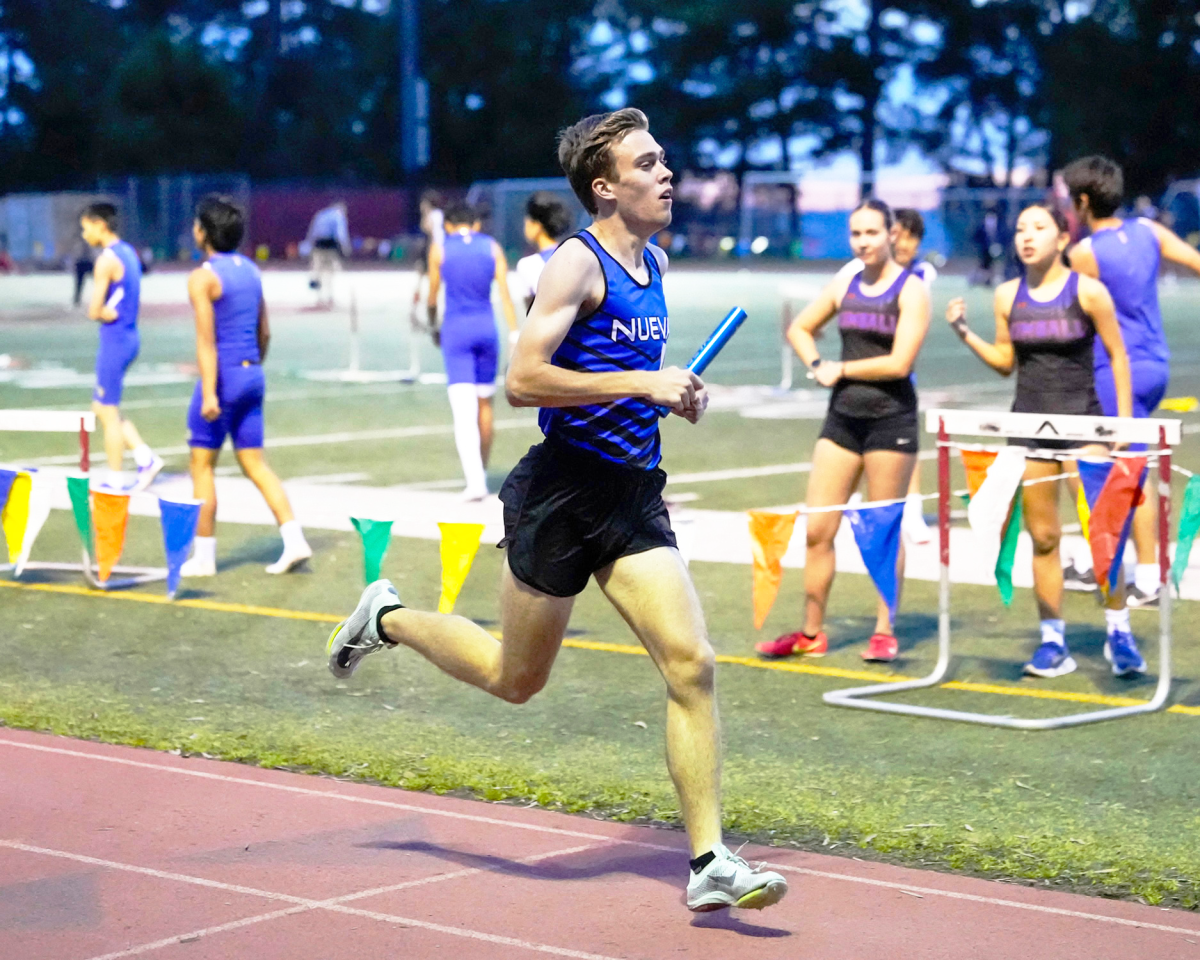
As runners’ spikes scrape the track and footsteps fall into steady rhythm, the sidelines sometimes burst into song.
Teammates stand around the trackside and improvise lyrics based on how many laps remain. If there are two laps remaining, suddenly every song contains the word two. When there’s one lap remaining, the lyrics change again.
“It’s something I’ve been doing and trying to get others to do with me,” Bella B. ’27 said. “It’s to get [the runners] to think about something while they are running, just because it’s a really long race.”
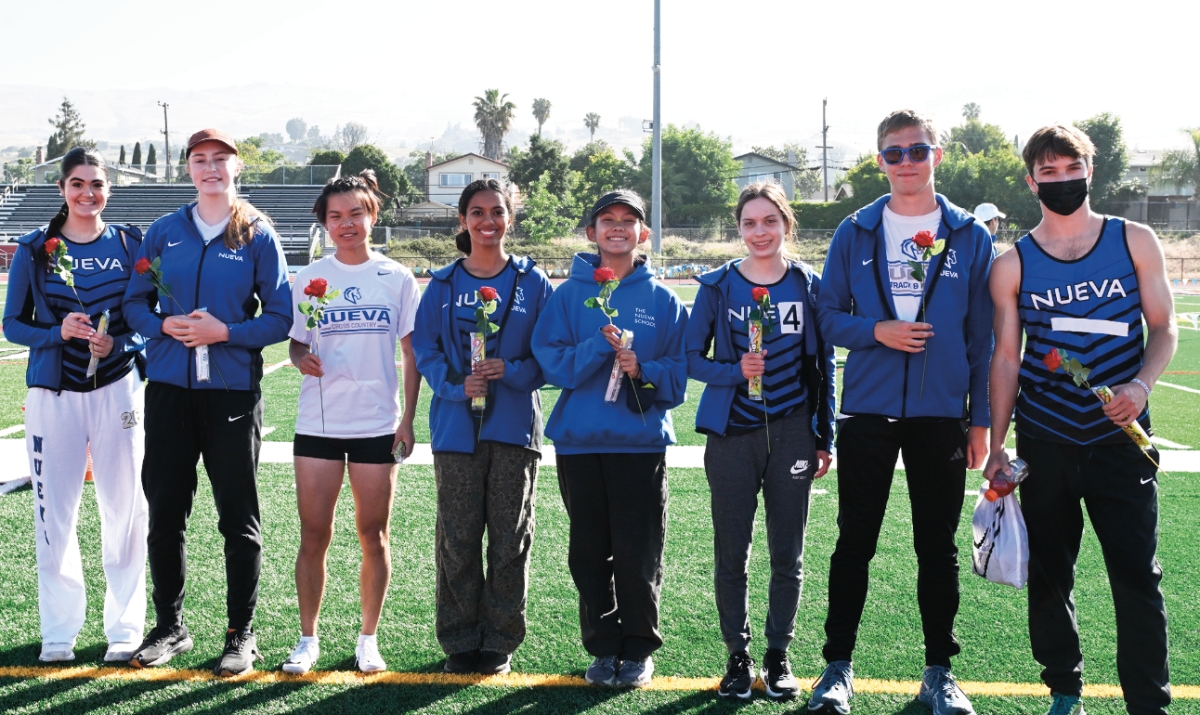
This scene captures the combination of intensity and support that has come to define the track and field team early this season. Already, the team has made a promising start. At the Skyline Invitational, the first meet of the season, the boys 4×800 relay took first place, setting an early benchmark.
Individual athletes had the opportunity to shine, too: freshman Reed C. ’29, who ran an impressive 4:54 1600 meter in one of his first high school track races, putting him second for the fastest a ninth grader ever ran the event on the team.
“He’s been working really hard,” Jonathan H. ’27 said. “It’s been awesome watching him improve and get more comfortable with the team. I’m really excited to see what he can do this season.”
Within the program, athletes say their success comes from their rigorous training schedule.
Practices run five days a week: Tuesdays and Thursdays are typically reserved for weight room training, while Mondays, Wednesdays, and Fridays are spent at the College of San Mateo track, where runners tackle interval workouts and speed sessions. The workouts are deliberately tough: six repetitions of the quarter mile with short recovery for the distance team for example, designed to push athletes beyond what feels comfortable.
Those workouts have developed their own traditions too, especially in the form of mantras.
“Last one, fast one,” teammates shout before the final interval run—a reminder that the last repeat should be the fastest of the day. Hill workouts come with another rule: once runners reach the top, they cannot relax—they must keep pushing for ten more strides. Even rest is ritualized: athletes refer to the night two days before a meet as “sleep night.” That’s when runners ensure they get rest, because recovery from that night tends to matter more than sleep immediately before the race.
Beyond just mantras and rituals, though, the team has also been experimenting with other creative ways to motivate each other. namely, betting on each others’ performances. The stakes aren’t monetary, but if certain time goals aren’t met, consequences follow. Currently, there’s a running bet that if Ashwin P. ’28 and Reed don’t run sub four minutes and 40 seconds for the mile, they will have to wear pink half tights to the first league meet.
“It’s not hazing, it’s just fun,” said Oscar S. ’28, who had to dye his hair fully blue last year for losing one of the bets.
Moments like these reveal something about the team outsiders rarely see; in addition to all the energy and games, the appeal of the sport may be simpler than it looks.
“There’s a place for everyone on the track and field team,” Lila P. ’26 said. “You don’t have to be fast [or] intense. You can just come and hang out.”
Improvement shows up whether you’re ready for it or not, and over the course of a meet, so does everyone else, watching it happen. “People think [running is] a lot of pain,” Lila said. “But there’s no better way to see your own progress.”