



















Over the past month in the Minneapolis-St. Paul area, thousands of Minnesota residents have banded together to resist Operation Metro Surge: an ongoing ICE operation that deployed 2,000 agents into the Twin Cities and led to 3,000 arrests and tragic deaths.
In this issue’s A Fuller Picture, we explore how the Minneapolis protests have unfolded and the role media has played in shaping public perception.
Much of the national media attention has focused on massive nonviolent marches in downtown Minneapolis. During these protests, tens of thousands of residents flooded the streets, calling for ICE to leave the state; the arrest of officer Jonathan Ross, who shot Renee Good; for private companies to end relations with ICE; and for the federal government to defund ICE.
While not nearly as visible, Minnesotans have also developed smaller grassroots initiatives, such as delivering groceries to families in hiding and placing outdoor furniture as ICE van-deterrents in streets. Thousands of residents created Singing Resistance, a group that has made it its mission to gather and sing outside ICE officers’ hotels. Their choruses of “It’s okay to change your mind. Show us your courage, leave this behind,” can be heard in the subzero winter weather.
Others have coordinated shifts to stand outside ICE detention centers. Because ICE can release detainees at any time of day, the volunteers wait outside to provide them with warm clothing, food, and free transportation.
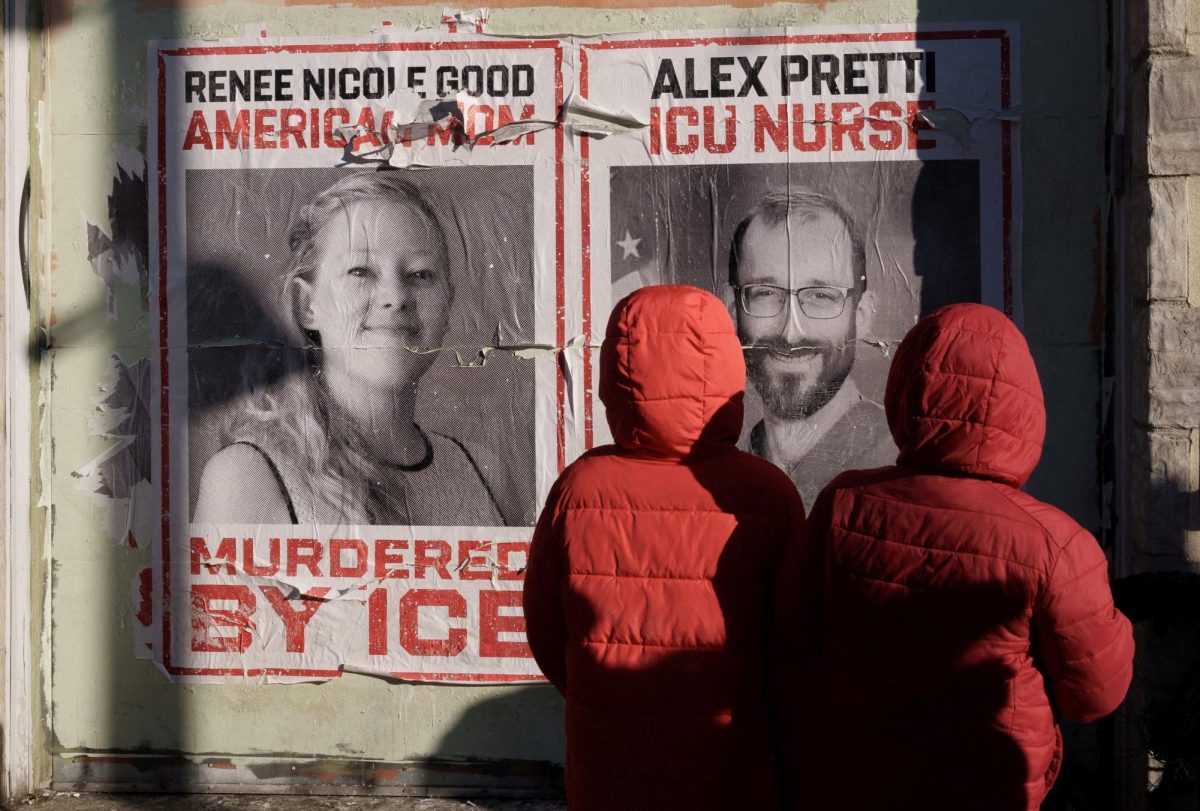
While most protest activity has been peaceful, there have been exceptions: outside of the Whipple Federal Building, which serves as ICE’s field office, at least 50 protestors were arrested by the county sheriff’s office on Feb. 7 after a memorial for Renee Good and Alex Pretti turned violent. The arrested protesters threw objects like ice chunks at local law enforcement, damaging a police car’s windshield and striking a sheriff’s deputy in the head.
Weeks earlier, protestors threw ice and rocks at local police at a Hilton hotel in downtown Minneapolis, where protestors believed ICE was staying. There, 30 people were arrested for unlawful assembly and for causing thousands of dollars in property damage.
Notably, it’s these more violent protests that have been amplified by media outlets such as Fox News and conservative social media influencers, while peaceful resistance tends to dominate coverage from left-leaning outlets and influencers. Though most outlets are presenting fact-based, verified information, each sheds light on a different story.
This selective coverage has generated fundamentally different understandings of events in Minneapolis across the political divide. Readers of conservative outlets that primarily highlight violent protesters may generalize all protesters as such. Conversely, when liberal media emphasizes ICE’s use of force, readers may conclude that agents are extremely cruel and cause chaos. This dichotomy of media coverage is where political polarization can begin—but seeking a fuller picture can promote the most realistic understanding about ICE activity and resistance from all sides of the political spectrum.