







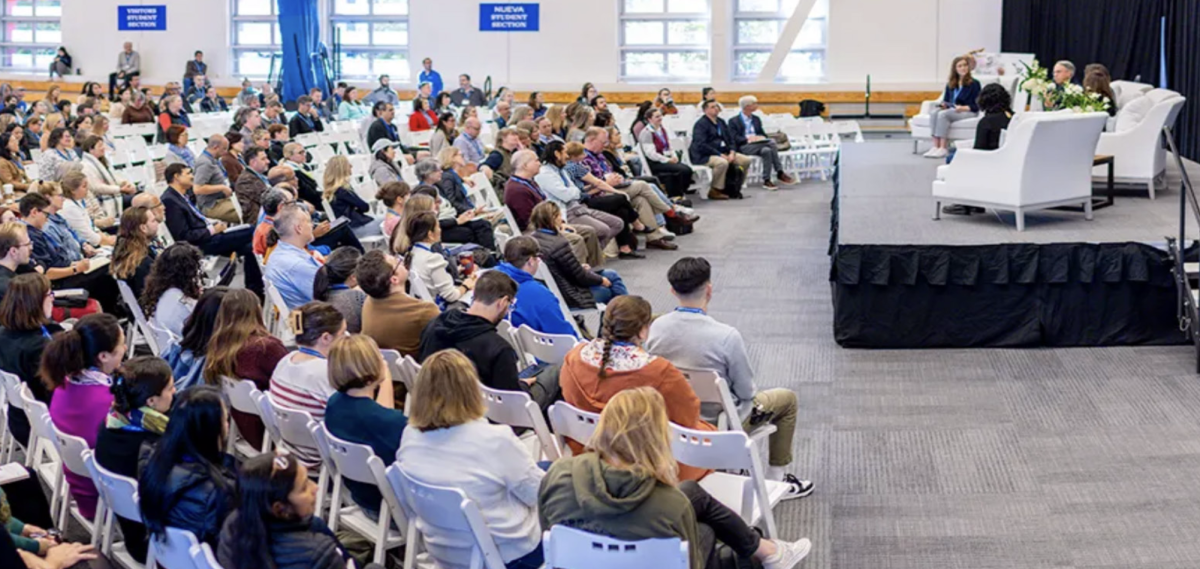
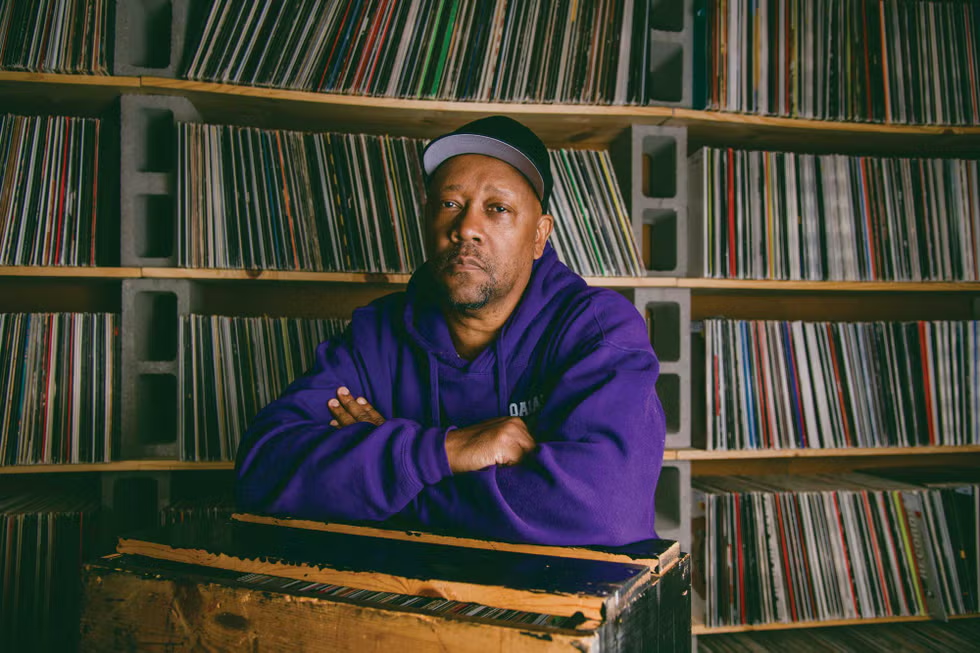
On Feb. 4, Upper School students filtered into the gym for an assembly honoring Martin Luther King Jr. Day and Black Heritage Month, featuring DJ and music journalist Dave “Davey D” Cook as a speaker. His presentation focused on the role of music in the Civil Rights Movement, encouraging students and faculty to consider how cultural figures can inspire social change through “the power of the microphone.”
‘[King] had a strategy,” Davey D said. “Music was in his toolbox. It was medicine. It gave them strength. It inspired love. It gave them hope.”
To preface Davey D’s presentation, Director of Equity and Inclusion Shawn Taylor noted that culture can often precede policy and politics. In the assembly’s aftermath, he expressed hope that students would carry its lessons forward.
“I hope everyone learned that politics and social change aren’t out of their reach,” Taylor said. “You don’t always have to go the traditional route; you can introduce or leverage pieces of popular culture to serve your ends.”
Following the assembly, students gathered with their advisory groups to reflect on the presentation, and later reconvened in the gym for a closing discussion led by Equity and Inclusion Coordinator Evan Vaughan. Vaughan drew parallels between Davey D’s speech and the current political situation in America, and encouraged students to continue seeking avenues for civil engagement.
Despite being pleased with the quality of the assembly, Dean of Students Jackee Bruno noted the exceptionally low turnout among upperclassmen. In an email sent to the senior class, he called on students to be more proactive participants: “Words can’t fairly express how disappointing it is to see so few of you here this morning. So many people have worked so hard to try to make today meaningful for people.”
Reflecting on the assembly, Taylor later emphasized the importance of recognizing Black artists and activists, particularly at a school with a small Black student population.
“Most students here probably have a lot of access and interaction with Black culture, but not Black people,” said Taylor, citing popular slang and music that originated from Black communities as an example.
Bruno echoed that idea, noting that, “as a Black person from the South, it was a pleasure to watch [Nueva students] be exposed to that.”
“To have you all be shown and learn about so many [Black artists], was cool for me to experience,” he added. “I saw some great conversations, and I think the students who attended did great.”