






















When Upper School math teacher Jana Comstock graduated high school, she was the fastest runner at her school and an avid track and field athlete. But at a larger college with faster competitors, she realized she wasn’t “built for running.” Instead, she aimed to join a sport that she could start from the ground up.
“I decided I would try a new sport because if I was going to be bad at something, I wanted to be bad at something that I wasn’t used to being good at,” Comstock said. “They had just passed Title IX, and with all the new energy surrounding women’s rowing, I decided I would try. And then I just fell in love with it.”
Thus began a rowing journey that would continue for the next four decades.
Through graduate school and beyond, Comstock competed wherever she could—racing singles when teams weren’t available, joining clubs when they were, and, later, even turning to triathlons. In college, with the help of more resources thanks to Title IX, Comstock and her team placed sixth in the NCAAs while competing against top programs nationwide.
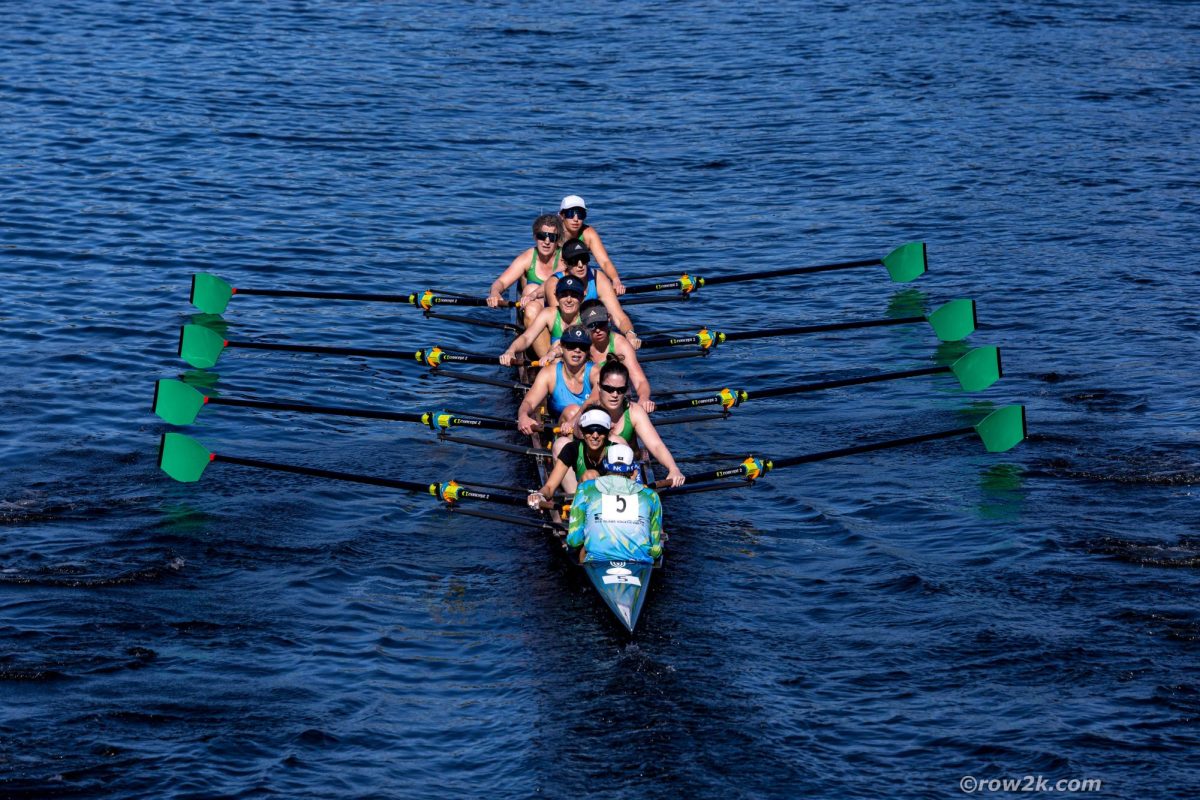
These days, Comstock continues to find success with her team at the Bair Island Aquatic Center in Redwood City. She competes at least four times a year, with the biggest competition being the Head of the Charles Regatta—the world’s largest three day regatta. Last year, her crew clinched third place, though Comstock noted that their time was compromised due to having to stop when another team refused to yield.
“The team is made of adults fitting rowing into our lives, around kids and careers and things like that. Some of us do it for fun, and some of us are more competitive,” she said. “We’re all really busy. Many of us, including myself, are working moms. It’s nice to have an activity reassuring us that it’s okay to take time for ourselves for something that benefits both our health and social lives.”
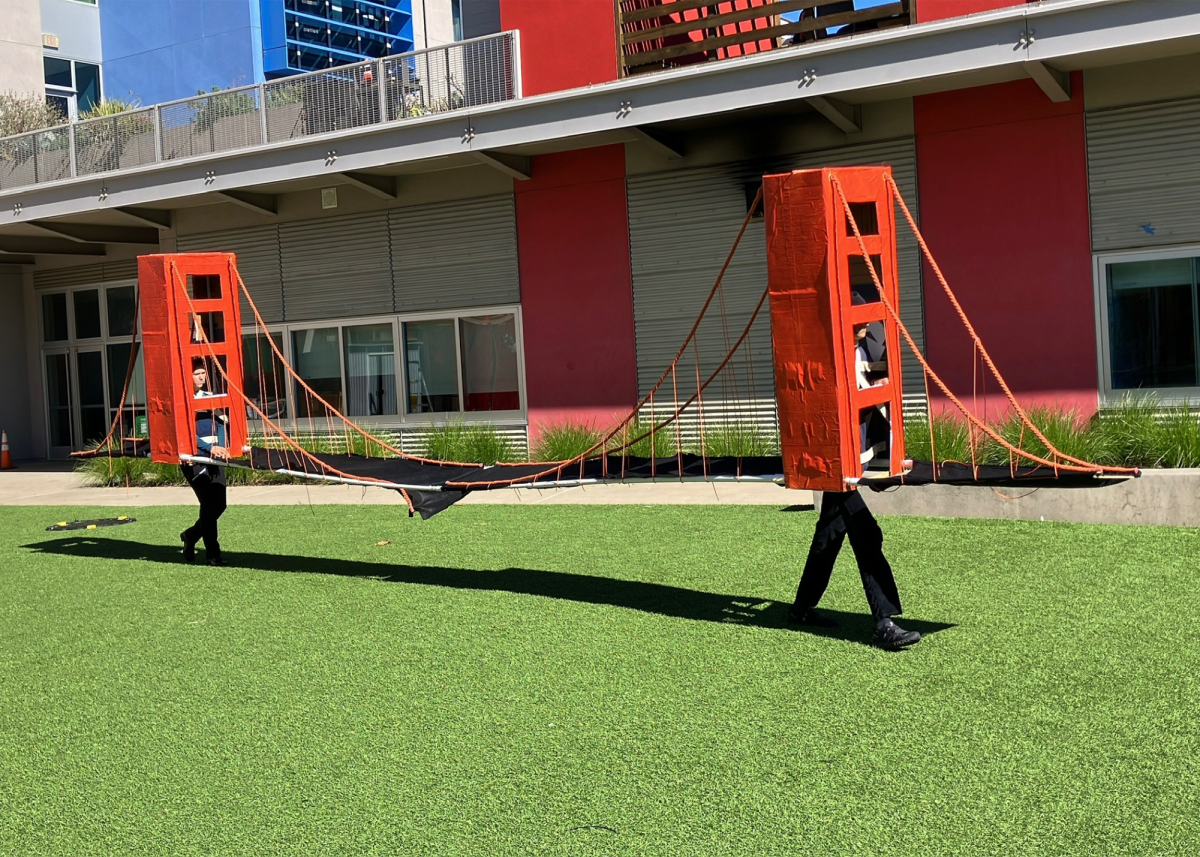
One of Comstock’s favorite traditions is the corkscrew regatta through Bair Island, where boats dress up each year. In past years, her boats were Ruth Bader Ginsburgs, Wonder Women, and a string of Christmas lights.
No matter her situation, Comstock has always found a way to participate in one sport or another.
“I’ve been doing them my whole life. It’s been a nice outlet when doing so much academic stuff because I have a different part of who I am being activated,” she said. “I value rowing and trying new sports because I like to do things that are difficult and challenge myself. Similarly, a big part of what’s valuable for me in mathematics is that there’s always a challenge and you can always push yourself to do something you couldn’t do yesterday.”
To Comstock, the appeal of rowing lies in its focus on technique.
“With rowing, along with the physical challenge of how cardiovascularly or muscularly fit you are, there’s a very technical challenge of how to be the most hydrodynamic.”
Comstock also is drawn to rowing because of her preference for team sports.
“I’m constantly matching up and working with the other people in my boat. I really enjoy doing it as a group where I have other people I’m answerable to while feeling like I can’t let them down,” she said.
For Comstock, rowing builds self-awareness while allowing her to challenge erroneous assumptions.
“As I’m getting older, I have to work harder. People look at me and see old. People conflate appearance with capability,” she said. “But I want to win the Head of Charles next year. I don’t care that much about how I look, but rowing is a big part of how I relate to my body and it informs me what I can do with it.”
Rowing not only impacts Comstock’s relationship with herself, but also her relationships with students.
“Rowing helps me develop empathy and reminds me of the perspective of my students. I push myself when I row, and that’s what I’m asking my students to do every day in class. It’s hard to do things that are challenging,” she said. “I also like to talk about rowing to some of my students who also row. It’s nice for me to know that there are people who also care about rowing at Nueva.”
In addition to growing her own rowing skills, Comstock looks forward to watching her daughter also take on the sport. Eventually, Comstock hopes to row a parent-child double with her at the Head of Charles some day.
“I’m so excited for her, whether or not she continues it in college. It’s something we can do together and talk about in the future,” Comstock said. “People who row from a young age have a special relationship with the water. Having a sport is a way to think about how to exist physically, [and] rowing gave me a relationship with my body. Seeing her as an adolescent girl, it’s something I want for her. Rowing is just so fun and so beautiful.”