




























As the conference headed into overtime, it seemed like the world leaders’ grueling climate negotiations would yield an unproductive result.
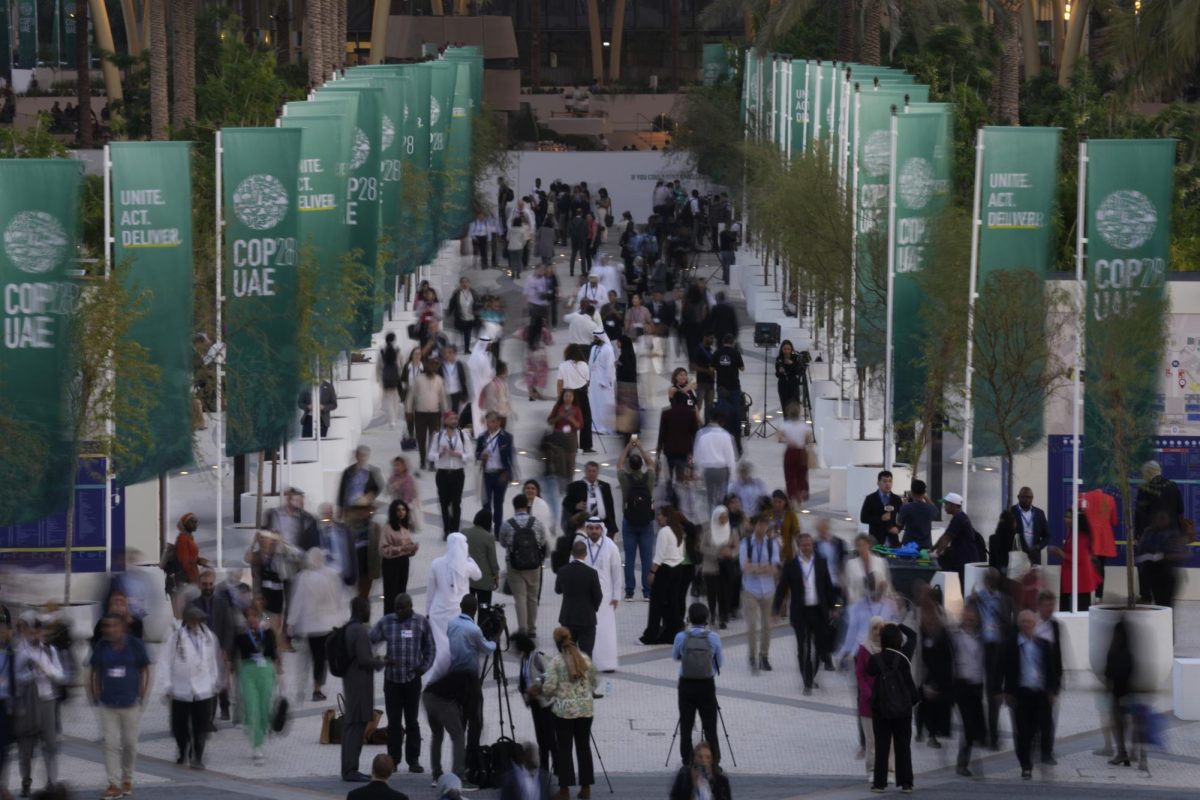
Yet, the final agreement of the 28th Conference of Parties (COP28) has pleasantly surprised many. Taking place from Dec. 1 to Dec. 13 in the United Arab Emirates, the annual conference is the largest global climate summit in the world with delegates from 197 nations.
In the summit’s final 11,000 word memo released on Dec. 13, a small but significant call for the “transitioning away from fossil fuels.” With no previous international agreements at this scope unanimously calling to end fossil fuels—the largest contributor to climate change—this was an ending that surprised many.
With global temperatures reaching 1.46°C above pre-industrial levels in 2023, the tone at COP28 this year was no longer about whether to take action but how and when.
Still, COP28 received backlash for hosting a record number of 2,400 fossil fuel lobbyists in Dubai. In contrast, Sudan, one of the world’s most climate-vulnerable countries, sent only 46 delegates.
The fossil fuel industry’s tight grip on COP28 was demonstrated by the U.A.E.’s top fossil fuel official Sultan Ahmed Al-Jaber presided over the event. On X, Al-Jaber’s “preposterous disguise… of the most brazen conflict of interest in the history of climate negotiations” was criticized by former Vice President Al Gore.
Other politicians have already started to call out the final agreement’s lack of specific wording. While COP28 reached a long-awaited consensus about phasing out fossil fuels, it is still clear that individual countries will need to be self-motivated in addressing the climate crisis.
The United States, one of the richest and most polluting countries in the world, was represented at COP28 by climate envoy John Kerry, 18 key delegates, and Vice President Kamala Harris. VP Harris announced the country’s pledge of $3 billion to the Green Climate Fund and called upon other world leaders to step up.