


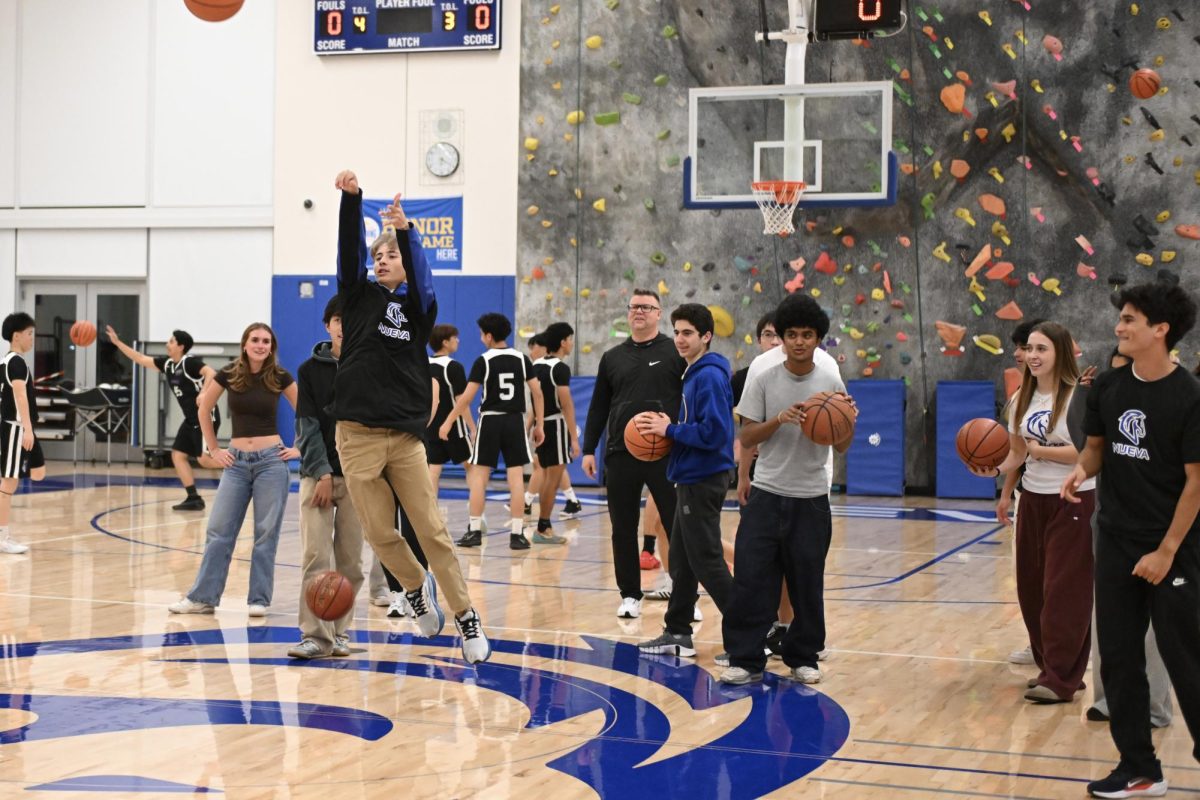





















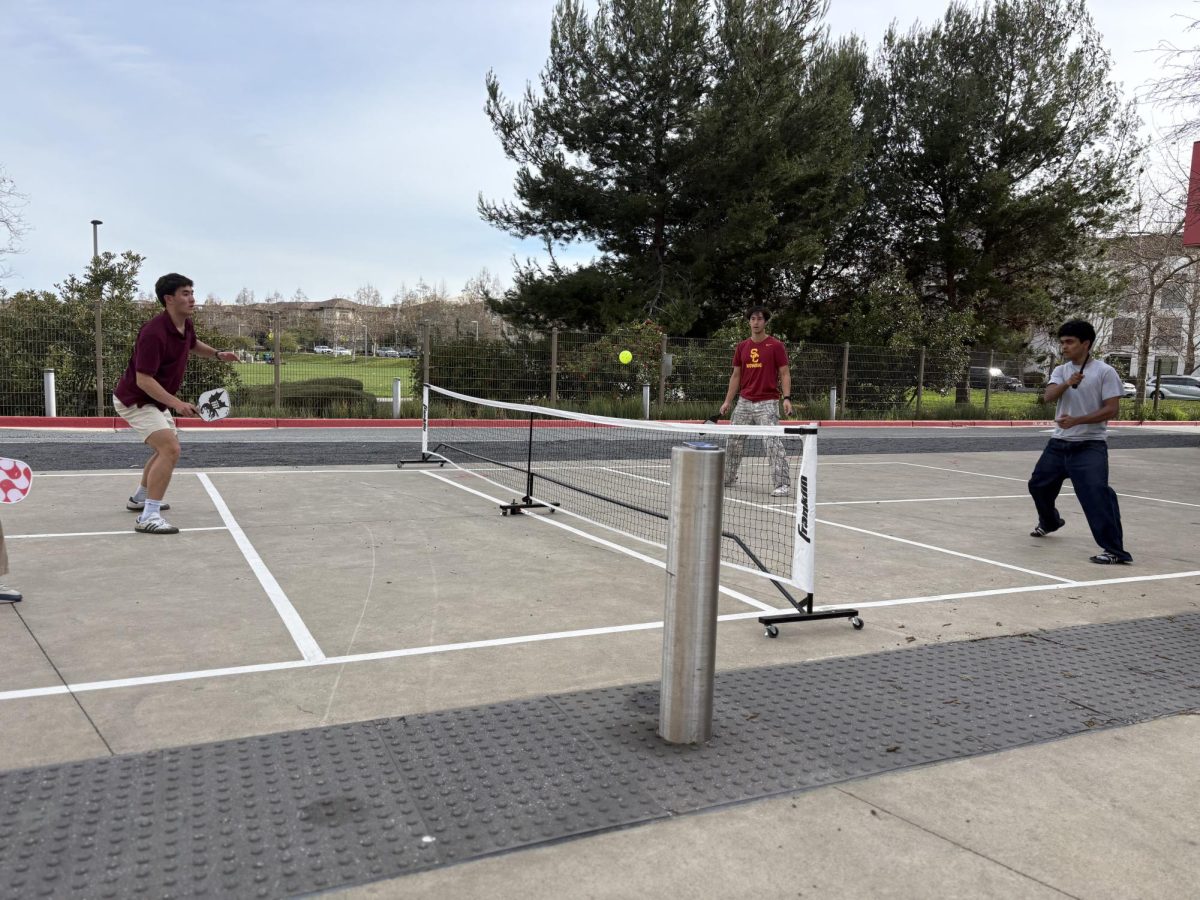
Couches previously strewn with students, heads bowed over their phones, can now be seen filled with card games and upbeat conversation. Previously, the Cafe courtyard was quiet, with a few people scattered around the tables. Now, the constant pops of a pickleball game fill in among the voices of students.
The Upper School Cellphone Policy was implemented at the beginning of the second semester this school year, with the intention being “not to ‘ban’ phones but to encourage mindful and respectful habits that foster focus, connection, and student agency,” as stated in the policy.
It is the first real policy the Upper School has had around cell phone use, with discussions of the phone policy taking place in many settings pre-December break, including at grade-level deans meetings, faculty meetings, assemblies, and advisory. Feedback from students and faculty on the initial draft of the policy led to clarifying edits and sparked critiques of the policy, with a mixed view on the potential effects.
“My primary hope after releasing the policy was that we would stop talking about the policy so much,” said Jackee Bruno, Upper School Dean of Students. “The result I wanted was that we would realize it’s not that big a deal.”
This result has mostly come to fruition, with students and staff taking part in support. On the first floor outside the Cafe, a countertop is stacked with board games and other activities supplied by Bruno. New pickleball and spikeball equipment were also provided.
These games were quickly taken up around school, with Codenames being particularly popular among the senior class. “I appreciate that admin and the people who care about the phone policy also care about filling that space with games for us,” said Ayaan M. ’26.
The college counseling department has also contributed its part to the policy, offering what is most popularly known as the ‘phone jail’. Here, the counselor in possession of the ‘jail’ takes the phone of any student not complying with the policy, locks it up, and returns it at the end of the day.
Incentives to follow the policy have been provided across campus. “I hope you’ve shared at least a fraction of my joy in seeing our community connecting without the use of phones this past week,” wrote Patrick Berger, 9th Grade Dean of Students, at the beginning of an email to the freshmen class.
He later shared that he would be rewarding a Hot Pot gift card to any student who could successfully beat Xochitl S. ’29 and Maddie L. ’29 in a game of foosball, the current dominating duo among students. The goal of this is to “incentivize and recognize [students] who are using these new guidelines around technology as an opportunity to connect with each other and challenge [themselves].”
“I’ve seen us doing a lot more together as a group,” said Matias V. ’26.
These greater investments in seeing where the absence of phones can take students have not gone unnoticed. “Every time I walk by [the senior couches], in addition to dishes everywhere, you see a game out,” Bruno said.
One concern for students before the policy took effect was access to schedule changes, classwork updates, and other important notifications. Despite these worries, Bruno has said the policy hasn’t posed a significant problem for accessing such updates, and there are no major changes expected in the near future.