





























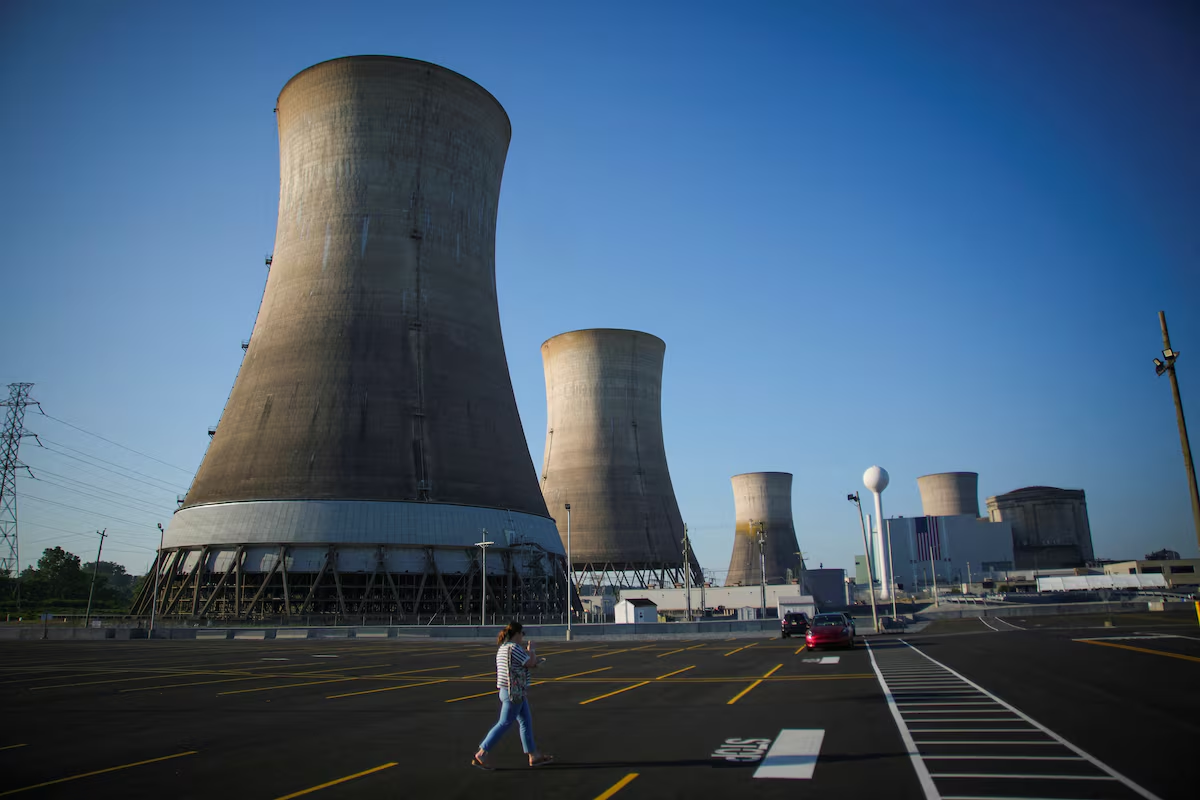
On Nov. 24, the Trump administration launched the “Genesis Mission,” an initiative to bolster artificial intelligence (AI) infrastructure and research. According to the White House website, Energy Secretary Chris Wright will be responsible for developing an “integrated AI platform” for “pressing national challenges,” in particular furthering development of nuclear fission and fusion energy.
Project Genesis’ dedication of federal resources toward nuclear energy is a sharp turn from the Trump administration’s historic prioritization of oil and gas. By invoking the National Emergencies Act to declare the first “national energy emergency” in history, Trump gave himself the power to suspend certain environmental regulations and reopen fossil fuel projects. Simultaneously, the administration has cancelled $7.6 billion in funding for hydropower, solar, and wind projects. In this issue’s A Fuller Picture column, we investigate the importance of nuclear energy and its ties to the AI industry.
Environmental experts often disagree on the role of nuclear energy in a green energy transition: while some want to focus on 100% renewable energy, such as wind and solar, others think nuclear projects are an essential component.
Already providing almost 20% of total American energy output, nuclear energy in the U.S. boasts a 90% capacity factor, making it the most efficient energy source in the U.S. today. Project Genesis intends to expand the current nuclear output from 100 GW (gigawatts) to 400 GW by 2050, one of the largest energy expansions in American history.
However, nuclear energy remains one of the most expensive energy sources to build from scratch. The cost to build new nuclear power generation is more than $7,000 per kilowatt-hour, substantially more than any other energy source. For example, two new plants in Georgia, whose construction was completed in 2024, cost over $36 billion, which was nearly $18 billion over the original budget.
But for tech giants including Amazon, Google, Meta, and Microsoft, nuclear energy is the ideal method of powering the large data centers. AI development has led to a surge in energy demand for data centers, even as companies promise to go net-zero in carbon emissions.
As a result, tech giants have already begun the transition to nuclear energy. Amazon has been powering their $650 million data center with the nearby Susquehanna Steam Electric Station, the largest operating nuclear plant in the United States. Meanwhile, OpenAI CEO Sam Altman, in 2021, invested $375 million into Helion Energies, a company dedicated to building the world’s first fusion power plant.
Trump’s nuclear pivot and Big Tech’s energy scramble suggests that the future of clean energy will not be decided by climate summits so much as by corporations and their political allies. As AI reshapes priorities, the Genesis Mission’s real test is whether its development will extend beyond the needs of powerful corporations to the broader aim of a national low-carbon power grid.